 IGUANIFY
Find Official Season Trailer Shorts on YouTube, PBS, and TikTok

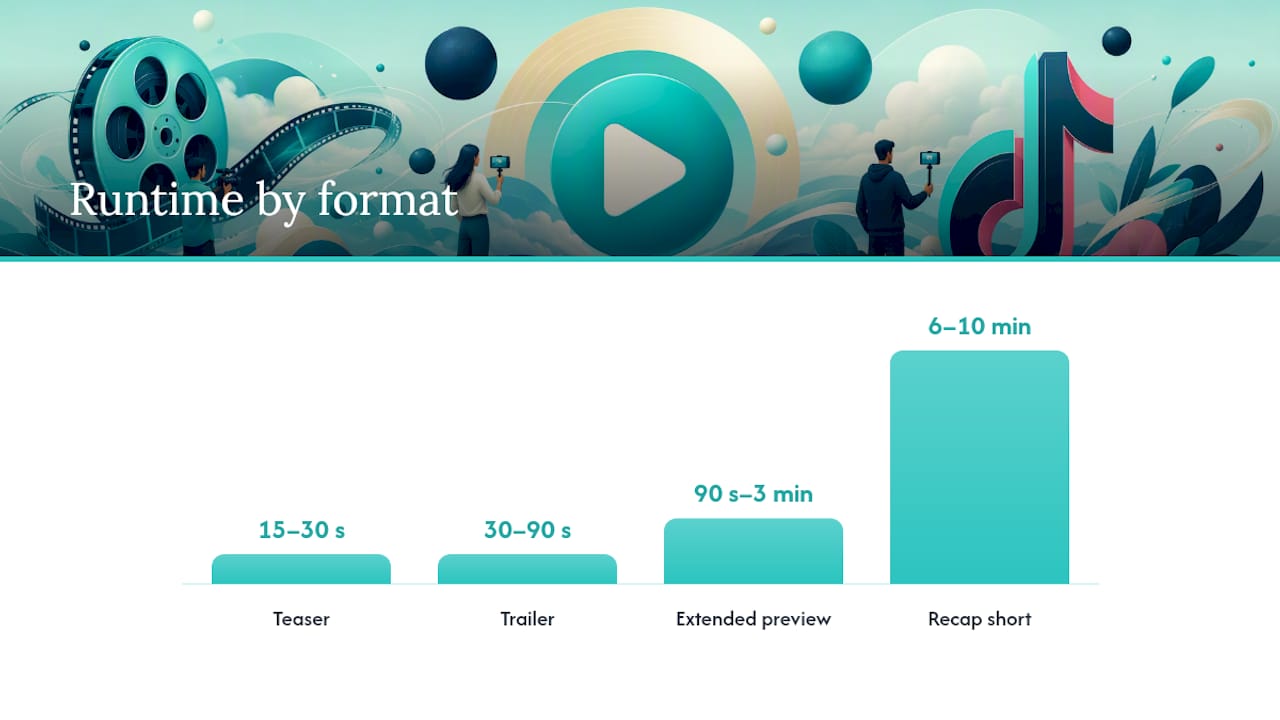
Season trailer shorts are the compact video previews (usually under two minutes) that studios, streamers, and public broadcasters release to promote a new season or an episode collection. You’ll find the most reliable ones on official YouTube channels, streamer apps, public-broadcast sites like PBS, and Shorts feeds on TikTok and Instagram. Runtimes range from 15-second teasers to 10-minute recap shorts, so the right format depends on whether you want a quick tease or a deeper refresher.
TL;DR:
- Official studio and broadcaster channels on YouTube are the most reliable sources for high-quality, approved trailer shorts, especially when they include matching metadata and no watermarks.
- Teaser clips under 30 seconds build initial awareness with minimal plot, while trailers of 30 to 90 seconds introduce key characters and overall tone.
- Extended previews, typically up to three minutes, reveal more of the season’s arc and help convert interested viewers closer to release, with recap shorts up to 10 minutes re-engaging lapsed audiences.
- Release sequences usually start with teasers months in advance, followed by trailers and final previews or recaps in the final week before the premiere.
- Sharing and tracking official trailers involves subscribing, creating playlists, and avoiding unofficial clips with watermarks or poor quality to maintain access and credibility.
Table of Contents
- Where to Find Season Trailer Shorts (Platforms and Channels to Check)
- Teaser vs. Trailer vs. Extended Preview vs. Recap Short: What’s the Difference?
- Why Studios Release Short Promos When They Do
- How to Watch, Save, and Share These Clips the Right Way
- How Short Season Previews Actually Get Made
- What Season Trailer Shorts Do to Viewer Anticipation
- What You’ll Actually See Inside a Season Trailer Short
- How Season Trailer Shorts Became a Marketing Staple
- The Marketing Logic Behind Every Short Promo
- Season Trailer Shorts as Part of the Bigger Promotional Push
- Why Short Promos Matter More Than Ever
- Sources
- FAQ
Where to Find Season Trailer Shorts (Platforms and Channels to Check)
The most dependable place to start is the official YouTube channel of the studio or streamer behind the show. These channels post the final, high-resolution cut of every trailer, and they’re the version the marketing team actually wants you to see. When a network drops a trailer shorts collection for an anthology series, the studio channel is almost always first.
Public broadcasters run a close second in reliability. PBS and its member stations, like THIRTEEN in New York, host extended trailers directly on their program pages with clear runtime labels and captioning info attached. The VOCES Shorts Season 2 extended trailer is a good example. It sits right on the PBS video page, not buried in a playlist, which makes it easy to bookmark and revisit.
Social platforms serve a different purpose. YouTube Shorts, TikTok, and Instagram Reels carry vertically cropped versions built for scrolling, not sitting-down viewing. These clips tend to run shorter than their YouTube counterparts and often lean on a single punchy moment rather than a full narrative arc. Check these feeds when you want a fast pulse check on a show’s tone, not the full preview experience.
Aggregator channels and fan compilations are where things get risky. Some do solid curation work, but plenty repost trailers without permission, strip out captions, or splice in watermarks. Historically, trailer sharing relied on lower-quality theater captures, a practice Archive preserves as a record of how far official digital distribution has come since. Today there’s no reason to settle for a shaky bootleg when the studio’s own upload is one search away.
A few signs separate an official upload from a knockoff:
- A verified channel badge or a channel name matching the studio, streamer, or network exactly
- A video description that links back to the show’s official page or streaming destination
- Upload metadata (resolution, captions, publish date) that matches the show’s actual premiere window
- No third-party watermark or reupload disclaimer sitting in the corner of the frame
Pro Tip: Subscribe to the studio’s channel and turn on notifications specifically for that channel, not just the algorithm’s recommendations. Studios often post trailer shorts hours before their scheduled press push, and the notification bell catches uploads before they hit trending feeds.
Teaser vs. Trailer vs. Extended Preview vs. Recap Short: What’s the Difference?
Each format serves a different job, and the runtime tells you what you’re about to watch before you even hit play.
A teaser is the shortest and vaguest, usually 15 to 30 seconds, built to create curiosity without giving away plot. A trailer runs 30 to 90 seconds and typically shows character introductions, tone, and a hint of conflict. An extended preview stretches to 90 seconds up to three minutes, giving a fuller sense of the season’s arc, which is where the VOCES extended trailer lands at 1 minute and 32 seconds. A recap short is the outlier, sometimes running up to 6 to 10 minutes, because its job isn’t to tease, it’s to catch you up.
That last format has real staying power. Vanity Fair’s recap of Westworld season one, delivered by actor Jimmi Simpson in six minutes, shows how a well-produced recap can replace an entire rewatch for a lapsed viewer.
Here’s how the four formats stack up side by side:
| Format | Typical runtime | Primary goal |
|---|---|---|
| Teaser | 15-30 seconds | Spark curiosity, minimal plot |
| Trailer | 30-90 seconds | Introduce characters and tone |
| Extended preview | 90 seconds to 3 minutes | Show fuller season arc |
| Recap short | Up to 6-10 minutes | Re-engage lapsed viewers |
Before you press play, check for accessibility signals: closed captions, a descriptive title (not just “Trailer 2”), and an official caption track rather than auto-generated text. The THIRTEEN program page labels its runtime and caption availability right next to the embed, which is the standard every official upload should meet.
Why Studios Release Short Promos When They Do
Season trailer shorts aren’t random marketing filler. Each one has a specific job in the release calendar, and understanding that job helps you know what to expect before you click.
A teaser announces that a new season exists, often months out, with almost no plot detail. A trailer, released closer to premiere, shows enough of the story to convince a lukewarm viewer to commit. An extended preview or a recap typically lands in the final week before the premiere, when the marketing team wants to convert interest into an actual watch. For anthology shows, trailers often do double duty by showcasing variety. The Bite Size Halloween season 3 trailer leans on its cast, including Tatiana Maslany and Brigette Lundy-Paine, to signal the range of stories packed into that season’s short-film roster.
Recap shorts play a slightly different role. They’re audience-retention tools aimed at people who watched season one, drifted away, and need six minutes of context before season two makes sense. That’s exactly what the Westworld recap accomplishes, letting a returning viewer skip a ten-hour rewatch entirely.
The release cadence usually follows this order:
- Teaser drops first, often tied to a streaming platform’s upfront announcements
- Full trailer follows weeks later, once casting and key art are locked
- Extended preview or recap short arrives in the final stretch before premiere, sometimes just days out
Platform choice tracks this cadence too. Studios push vertically cropped, punchy cuts to Shorts and TikTok for reach, while the full-length preview lives on YouTube or the broadcaster’s own site, where a viewer who’s already invested can watch the whole thing without interruption.
Pro Tip: If you want to know whether a short is editorially sanctioned rather than fan-made, check whether the same clip (same edit, same music cue) appears on both the studio’s YouTube channel and its official social accounts. Coordinated cross-posting is a strong signal that marketing, not a fan editor, built the clip.
How to Watch, Save, and Share These Clips the Right Way
Finding a good trailer short is only half the job. Keeping track of it, and sharing it without spreading a broken or unofficial copy, takes a few deliberate habits.
- Subscribe and organize. Follow the studio or streamer’s official channel, then build a dedicated playlist for the shows you’re tracking so new trailer shorts land in one place instead of scattered across your watch history.
- Use Watch Later strategically. YouTube’s Watch Later queue works fine for one-off previews, but a named playlist works better once you’re following more than two or three shows at once.
- Bookmark broadcaster pages directly. Public media pages like the THIRTEEN VOCES page host their own embeds, so bookmarking the page itself protects you if the video ever moves on YouTube.
- Check the Shorts shelf regularly. Studios often post vertical cuts to the Shorts shelf a day or two before the horizontal trailer goes live on the main channel, so checking Shorts first can get you an early look.
When it’s time to share:
- Use the platform’s native share or embed button rather than downloading and reuploading the clip elsewhere.
- Credit the official channel by name in your caption or post, both out of fairness and because it helps viewers verify the source.
- Confirm captions are present before sharing with anyone who relies on them.
- Skip clips with visible watermarks from unrelated accounts. Those are almost always unauthorized reposts.
If you’re building out video content of your own and want it to actually get found, a resource like this video SEO guide breaks down the metadata habits that separate a discoverable upload from one that disappears into the algorithm.
How Short Season Previews Actually Get Made
Behind every trailer short is a production decision about format. Full studio trailers get cut by professional editors working from complete episode footage, which is why they carry the polish you see on a network’s YouTube channel. Social-first vertical edits are often a separate cut entirely, reframed and re-timed specifically for Shorts and TikTok rather than just cropped from the horizontal version. Public broadcasters take a third route, hosting longer, less-produced extended previews directly on their own program pages, prioritizing accessibility metadata over flashy editing.
For creators building their own short-form drama rather than just watching studio output, the production bottleneck usually isn’t ideas, it’s continuity. Keeping the same character looking and sounding consistent across multiple short episodes used to require either a full production team or a lot of manual fixing in post. Automated episodic tools have started closing that gap. Iguanify, for instance, automates the episodic production pipeline and maintains consistent recurring characters across episodes, which addresses one of the most common complaints creators have about AI-assisted video: characters who look different from clip to clip. Such platforms can also support real-time production and delivery, allowing a creator to move from a single line of script to a finished, publishable episode without a separate editing pass.
Rights matter here too. Official channels host the final, highest-quality copy of a trailer precisely because the studio or network controls distribution rights to that footage. If you’re a creator making your own promotional shorts or recap-style content, securing clear rights to any footage you use, or building original content instead, protects you from takedowns later. That’s part of why tools that give creators full ownership over what they produce carry real practical value, not just convenience.
Fan-made recap videos and official recaps serve overlapping but distinct purposes. A fan recap might be more casual and opinionated, useful if you want commentary alongside the plot refresher. An official recap, like the Vanity Fair Westworld piece, tends to be tighter, backed by the actual production, and safer to trust for accuracy. If you’re a creator experimenting with your own recap format, studying short drama ideas built for 60 to 90 second runtimes can help you figure out how much story actually fits in a tight window.
What Season Trailer Shorts Do to Viewer Anticipation
A well-cut trailer short changes how you approach the actual premiere. Instead of walking in cold, you arrive with expectations set: you know the tone, you’ve clocked a returning character or two, and you’ve probably already picked a favorite storyline to watch for. That’s the entire point of the format.
Recap shorts do something slightly different but equally powerful. They lower the barrier to re-entry. A viewer who dropped off midway through season one and feels too far behind to catch up is far more likely to tune back in after a six-minute refresher than after being told to rewatch eight hours of television. The Vanity Fair recap model works because it respects the viewer’s time while still delivering the plot points that actually matter.
Anticipation also compounds across the release cadence. A teaser alone rarely converts anyone, but a teaser followed by a trailer, followed by an extended preview close to premiere, builds momentum in stages. Each clip gives a slightly fuller picture, and by the time the premiere lands, a viewer who’s watched all three has effectively pre-committed. That staged reveal is a big part of why studios don’t just dump the full trailer on day one and call it done.
What You’ll Actually See Inside a Season Trailer Short
Most season trailer shorts follow a recognizable internal structure, even when the show itself is wildly different from one title to the next. Expect a quick tone-setting shot within the first few seconds, since trailer editors know viewers decide whether to keep watching almost immediately.
From there, the clip usually introduces or reintroduces key characters, often through quick cuts rather than lingering shots. Anthology-style trailers, like the Bite Size Halloween season 3 preview, lean harder on cast names and quick flashes of each short film’s premise, since the goal is showing range rather than following a single plot thread.
Music and pacing do a lot of the emotional work. A trailer short will typically build to one standout moment, a line of dialogue, a visual reveal, a cliffhanger beat, right before the title card. Recap shorts skip that structure entirely in favor of narration or on-screen text that walks through plot points in order, since their job is clarity, not suspense. Expect a title card or key art near the end of almost every format, along with a premiere date if one’s been locked.
How Season Trailer Shorts Became a Marketing Staple
Trailer shorts didn’t start as a digital-native format. Long before YouTube existed, theatrical trailers played in physical theaters, and enthusiasts sometimes captured those reels for archival purposes, a practice documented in collections like Archive.org’s 35mm trailer archive. Those captures were often lower quality and inconsistently preserved, which is part of why official digital uploads eventually became the standard.
The shift to streaming changed the incentive structure entirely. When a show’s success depends on a subscriber choosing to click play within the first few seconds of browsing, a tight, well-produced trailer short becomes a direct driver of viewership rather than just a nostalgic promotional extra. Streamers responded by investing heavily in short-form promo editing, distinct from the trailers that used to run exclusively in front of movies.
Social platforms accelerated the format’s evolution again. Once TikTok and Instagram Reels normalized vertical, sub-minute video consumption, studios started producing separate vertical cuts specifically for those feeds rather than just cropping the horizontal trailer. That’s a meaningfully different skill set than traditional trailer editing, and it’s part of why so many marketing teams now maintain dedicated social-first edit teams. Public broadcasters have taken a steadier path, continuing to host longer, accessibility-focused extended previews directly on program pages, which is exactly the model PBS and THIRTEEN use for shows like VOCES today.
The Marketing Logic Behind Every Short Promo
Every season trailer short exists to solve one problem: convincing someone to spend an hour, or ten, on a show they haven’t committed to yet. That’s the entire marketing strategy in one sentence, and everything else is execution detail.
Teasers exist to plant a flag early, often before a season even has a firm premiere date, so a show stays on a viewer’s radar during the gap between announcement and release. Trailers exist to convert curiosity into an actual calendar reminder. Extended previews and recap shorts exist to close the deal in the final stretch, when a viewer is deciding what to watch tonight, not next month.
The format choice itself is strategic too. A punchy 30-second vertical cut on TikTok is built for discovery, reaching people who’ve never heard of the show. A three-minute extended preview on a broadcaster’s site is built for conversion, giving an already-interested viewer enough detail to commit. Studios rarely waste a single clip trying to do both jobs at once, which is exactly why you’ll see different edits of the same footage across different platforms.
Season Trailer Shorts as Part of the Bigger Promotional Push
A single trailer short almost never works alone. It’s one piece of a broader campaign that includes poster art, cast interviews, social media countdowns, and sometimes press events, all timed to build toward the same premiere date.
What the trailer short adds that other marketing assets can’t is motion and tone. A poster tells you who’s in a show. A trailer tells you what it feels like to watch it. That’s why trailers typically get held for the moment when a campaign needs its biggest conversion push, usually a few weeks before premiere, after teasers and stills have already done the work of generating basic awareness.
The staged release also gives platforms multiple moments to promote the same show through their own algorithms. A teaser trending on Shorts, a trailer premiering on YouTube, and a broadcaster hosting an extended preview all create separate discovery opportunities spread across weeks instead of one single announcement that fades from feeds within a day. If you’re curious how creators structure their own short-form arcs to build similar anticipation, micro beat templates for shorts show how that staged-reveal logic scales down to solo creator projects too.
Why Short Promos Matter More Than Ever
Short trailer shorts work because they respect something streaming often ignores: your time. A 90 second preview tells you everything you need to decide whether a season is worth your evening, without demanding you sit through a five-minute cut padded with filler.
That’s why this guide leans so heavily on official channels and accessibility signals. A captioned, verified upload from PBS or a studio’s own channel isn’t just more trustworthy, it’s usually better made. If you take one thing from this guide, check the official channel first and turn on notifications. The good clips find you before the algorithm buries them.
— Leonard
Sources
- Watch Jimmi Simpson recaps Westworld season 1 in 6 minutes | Story So Far | Vanity Fair
- Bite Size Halloween season 3 trailer: Tatiana Maslany, Brigette Lundy-Paine & more star in horror shorts
- Extended Trailer | VOCES Shorts Season 2 | VOCES | THIRTEEN - New York Public Media
FAQ
What Is the Newest YouTube Short for a TV Season?
The newest release depends entirely on the show, since studios post on their own release schedules rather than a shared calendar. Check the official studio or streamer’s YouTube channel directly, since that’s where new trailer shorts and Shorts-format cuts appear first, usually alongside a matching post on the show’s social accounts.
Which Comes First, the Teaser or the Trailer?
The teaser comes first, typically released weeks or months ahead of the trailer, with minimal plot detail meant to build early awareness. The full trailer follows later, once casting and key art are finalized, and it’s designed to convert that early curiosity into an actual commitment to watch.
What Is the Difference Between a Teaser and a Trailer?
A teaser is shorter, usually 15 to 30 seconds, and reveals very little plot, while a trailer runs 30 to 90 seconds and shows character introductions, tone, and a hint of the central conflict. Extended previews go further still, sometimes reaching three minutes, and recap shorts can run up to 6 to 10 minutes to catch viewers up entirely.
Which YouTube Channel Is Best for Movie or Show Trailers?
There’s no single best channel, since the most reliable source is always the official channel of the specific studio, streamer, or network behind that title. For public-broadcast programming, channels run by PBS and member stations like THIRTEEN are dependable, and they typically label runtime and caption availability directly on the video page.