 IGUANIFY
8 Short Drama Ideas for Solo Creators, Shoot in 60–90 Seconds

Make 60 to 90 second vertical serials built around a recurring cast and a repeatable cliffhanger. The premises that scale fastest are secret-identity, revenge, contract-relationship, and constrained-situation drama because each one gives you a new emotional turn every episode without a new setting or cast. Automation platforms make this format practical for a solo creator, since character consistency and instant episode delivery are what actually gate how fast you can produce.
TL;DR:
- Short dramas thrive on confined settings and recurring cast members to keep production costs low and continuity consistent across episodes.
- Building a season with planned cliffhangers and clear character assets prevents plot and visual inconsistencies that can kill viewer engagement.
- A three-beat episode structure—hook, emotional turn, cliffhanger—maximizes viewer retention in 60 to 90 second vertical formats.
- Regular release schedules and cross-platform posting significantly boost viewer engagement and episode completion rates.
- Automated production platforms allow solo creators to generate and own a serialized series from concept to finished episodes, ensuring full control and cost efficiency.
Table of Contents
- 8 Short Drama Ideas Ready for Vertical Production
- How to Structure a Single Episode for Vertical Serials
- Production Checklist for Automated Episodic Pipelines
- Release Cadence and Retention Tactics That Make Short Dramas Stick
- Quick Pitch Templates: Concept to Three Episode Beats
- Producing Vertical Serials with AI, an Editorial View
- Produce Your Season with Iguanify
- Sources
8 Short Drama Ideas Ready for Vertical Production
These eight premises share three traits: a single confined situation, a cast that fits in one room or one relationship, and a conflict that naturally regenerates every 60 to 90 seconds. That third trait is what separates a good short-drama premise from a good short-film idea. A vertical drama built on a tight, high-concept premise lets viewers jump in mid-season and still follow the plot, which matters when your discovery traffic arrives at episode 40, not episode 1.
-
The Fake Fiancée Contract. A struggling actress agrees to pose as a tech founder’s fiancée for one investor dinner. It turns into a season. The cliffhanger pattern renews itself every episode: someone new discovers the arrangement is fake, and the stakes of exposure escalate. Automation note: one apartment set, two wardrobe changes, and a locked voice model for the founder carry an entire season.
-
Secret Identity, Small Town. A former undercover operative starts a quiet life running a bakery, until a face from the old job walks in. Each episode reveals one more piece of the past while the present-day threat closes in. This premise is friendly to AI-based continuity because the “before” and “after” versions of the character can be locked as two consistent identities from day one.
-
The Inheritance Clause. Four estranged siblings must live under one roof for 90 days to inherit their father’s business. Cliffhanger engine: a new rule, betrayal, or hidden clause drops at the end of nearly every episode. One house, one recurring cast of four, and a rotating guest character keep production costs flat.
-
Revenge Under an Alias. A woman returns to her hometown under a new name to dismantle the family that ruined hers. The tension beat writes itself each episode: how close does she get before someone recognizes her? Revenge arcs are durable because the goal never resolves early. It escalates.
-
The Marriage of Convenience. Two rivals are forced into a business marriage to save their competing companies. Workplace and domestic settings alternate, giving you two reusable locations instead of one, without adding cast.
-
Locked In. A group of coworkers gets trapped in an office building during a storm, and old grievances surface fast. This is the purest constrained-situation format: one set, one night, escalating pressure. It is close to a filmed stage play, which makes it exceptionally cheap to render at scale.
-
The Double Life Nanny. A nanny hired by a wealthy family is secretly the heir to a rival fortune, working undercover to expose a decade-old betrayal. Domestic setting plus a slow-burn reveal gives you dozens of small cliffhangers before the big one lands.
-
Second Chance Contract. Two ex-spouses are forced to co-run a family restaurant for one year per the will. Old wounds, new stakes, one kitchen set. The romantic tension and the business conflict give you two cliffhanger engines running in parallel, so you rarely run out of escalation material.
Each of these premises maps cleanly onto series hooks that convert in the first three seconds, which matters more than plot originality once you are competing for a scroll-stopping first frame.
How to Structure a Single Episode for Vertical Serials
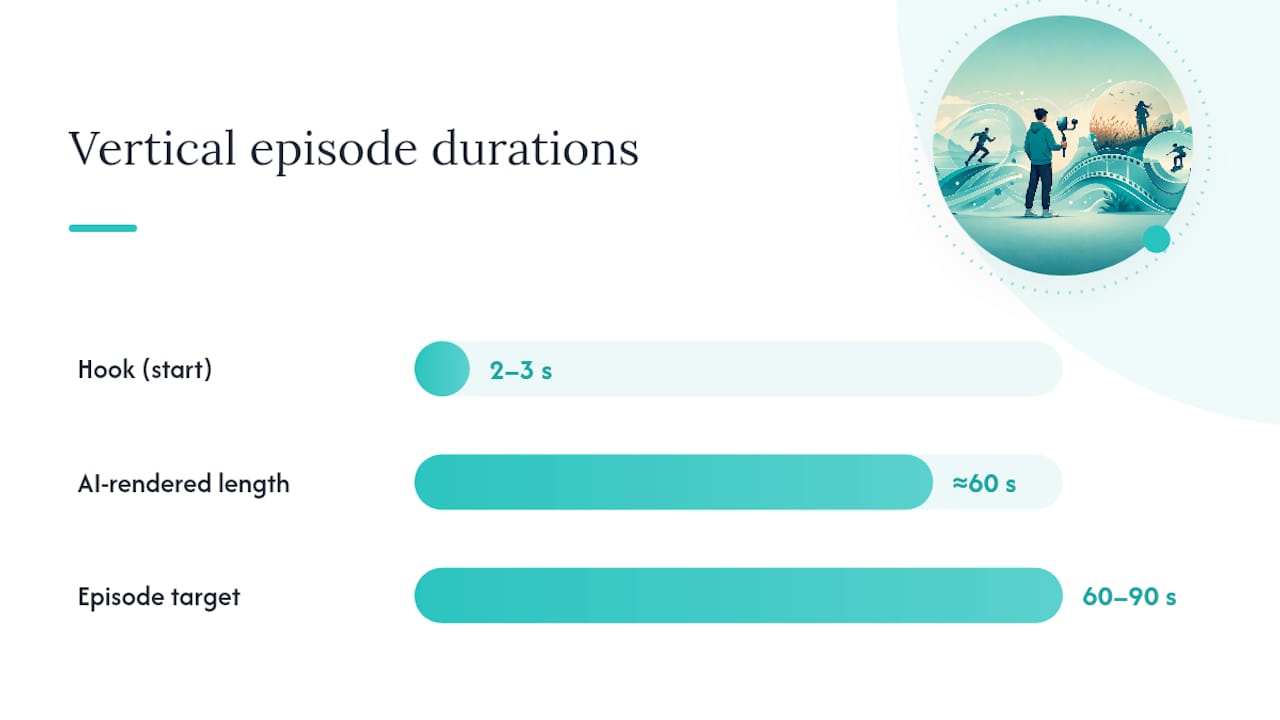
Every strong vertical episode follows the same three-beat shape: a 2 to 3 second hook, one emotional turn, and a cliffhanger cut to black. Skip any beat and completion rate drops fast, because viewers scrolling vertical feed decide whether to stay within the first two seconds.
Format basics that matter for automated rendering:
- Shoot and script for 9:16 vertical framing, never landscape.
- Target 60 to 90 seconds per episode; AI-rendered episodes often land closest to 60.
- Open with visual or verbal shock, not exposition. Save backstory for episode two or three.
- End on an unresolved image or line, never a wrap-up sentence.
- Keep dialogue lines short enough to read as captions at a glance.
Iguanify’s script-format standard breaks each beat into timestamped lines so an automated pipeline knows exactly where the hook ends and the turn begins.
Pro Tip: Write your cliffhanger line first, then build backward. If you can’t cut the episode cold on a strong last line, the premise probably needs more tension, not more plot.
Production Checklist for Automated Episodic Pipelines
Consistency, not creativity, is what breaks most solo creators trying to run a season. Locking character assets before episode one is the single highest-leverage step in this checklist.
- Build a character bible: locked face, wardrobe set, and voice anchor for every recurring cast member.
- Write a beat sheet for the full season before producing episode one, so the cliffhanger engine is planned, not improvised.
- Assemble an asset library covering locations, recurring props, and music cues, and version everything so episode 30 still matches episode 1.
- Run a continuity pass on every episode: same face, same wardrobe, same voice.
- Check pacing against your three-beat structure before rendering.
- Confirm dialog clarity and subtitle accuracy, since most vertical viewers watch with sound off.
Pro Tip: Treat your character bible as a contract with your future self. The tenth episode should never require guessing what your lead looked like in episode one.
A faceless production workflow follows the same checklist, just with animated or AI-generated leads instead of on-camera talent.
Release Cadence and Retention Tactics That Make Short Dramas Stick
Tight, regular drops build appointment viewing the way daily soap operas always have. Deloitte’s analysis of short-form video series notes that clustered release schedules keep audiences returning on a rhythm rather than drifting away between episodes.
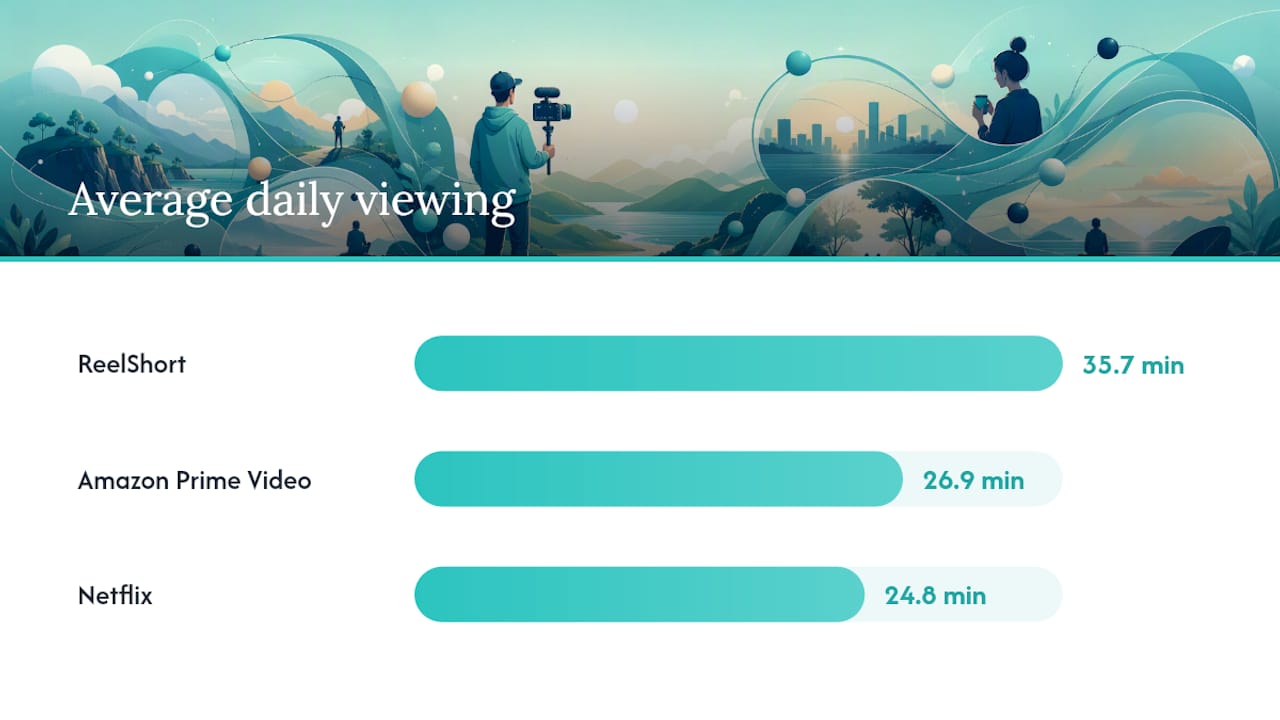
The retention numbers back this up: ReelShort users now average 35.7 minutes of daily viewing, ahead of Amazon Prime Video’s 26.9 minutes and Netflix’s 24.8. Vertical microdrama did not just carve out an audience. It out-engages the incumbents on their own turf.
Track three numbers as you iterate:
- Completion rate per episode (aim above 70% before scaling a premise).
- Episodes watched per viewer across a season.
- Return rate for episode two after episode one.
Cross-post the same cut to TikTok, YouTube Shorts, and Instagram Reels, then layer in paid discovery once organic completion rate proves the premise works.
Quick Pitch Templates: Concept to Three Episode Beats
Fill in each blank and you have a pilot plus two follow-ups ready for an automated generator.
- Contract premise: “[Character A] must pretend to be [role] for [Character B] to get [stake].” Episode 1: the deal is struck. Episode 2: someone almost exposes it. Episode 3: real feelings complicate the lie.
- Secret identity premise: “[Character] hides [past life] while living as [current role].” Episode 1: the past resurfaces. Episode 2: a near-discovery. Episode 3: a forced choice between identities.
- Revenge premise: “[Character] returns as [alias] to take down [target].” Episode 1: the return. Episode 2: the first move against the target. Episode 3: the target grows suspicious.
- Constrained-situation premise: “[Group] is forced to [shared confinement] for [stakes].” Episode 1: the rule is set. Episode 2: a betrayal surfaces. Episode 3: an alliance breaks.
Swap the confinement device for genre. A locked office becomes a locked cabin for thriller, a locked greenroom for showbiz drama.
Producing Vertical Serials with AI, an Editorial View
Pacing kills more short dramas than weak premises do. Creators tend to over-explain episode one instead of trusting the hook, and they lose the viewer before the emotional turn even lands. The second lesson is about continuity: a season only holds together if the cast looks and sounds the same in episode 40 as episode 1, which is exactly the problem locked character assets solve.
Do write your cliffhangers before you write anything else. Don’t treat AI production as a shortcut around planning a season’s beat sheet. The tool renders faster; it does not think for you.
— Leonard
Produce Your Season with Iguanify
A platform turns the planning above into finished vertical episodes without a production team. You describe a premise, and it generates a consistent recurring cast, full episode renders, and delivery ready for TikTok, YouTube, or Instagram, with full ownership of what you produce.
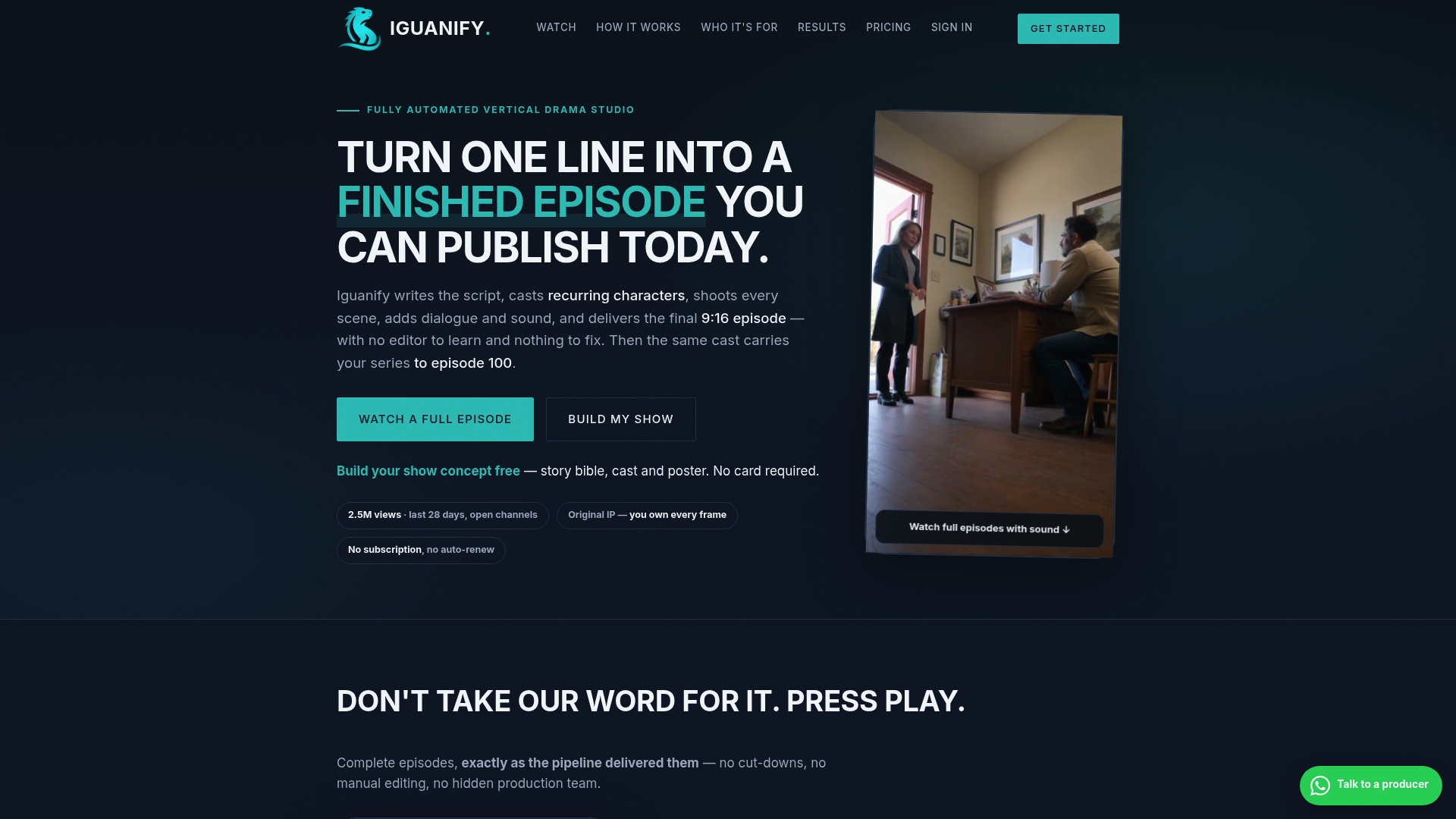
That last part matters more than it sounds: you keep the rights to every episode, so a premise that takes off is yours to build into a season, a spinoff, or a licensing deal. Instead of hiring editors to chase continuity across 60 episodes, the character bible stays locked from the first render to the last.
Start by generating a free show concept, then run a single episode credit through the AI Drama Generator to see your cast rendered before committing to a full season. If you’re modeling your approach on the ReelShort-style serialized format covered above, the step-by-step production guide walks through turning one of the premises above into your first three episodes today.
Sources
- Short-form video series | Deloitte Insights
- Microdrama apps surpass Netflix, Prime Video in US mobile engagement
- Issa Rae vertical microdrama coverage | No Film School