 IGUANIFY
Faceless Drama Channel Playbook for YouTube Creators
A faceless drama channel is a storytelling YouTube channel that never shows the creator on camera and makes money through repeatable formats, sharp hooks, and a real production system. The fastest way to start: pick one repeatable format, write a script that opens with a hook, batch-produce a three-to-five video pilot, and publish it as a serialized playlist so the algorithm has a series to promote, not a one-off clip.
A faceless drama channel that survives past month three usually has three things in place before it publishes video one: a format it can repeat 50 times without running dry, a script structure that front-loads conflict, and a workflow that doesn’t require you personally to touch every step.
Before you write a single script, lock these three things down:
- Format: confession, AITA-style, workplace drama, or serialized fiction
- Workflow: who scripts, who voices, who edits, on what schedule
- Monetization: AdSense plus one other stream from day one, not month twelve
Key Takeaways
A faceless drama channel succeeds when a repeatable format, a hook-driven script structure, and a batched production workflow combine with at least two revenue streams from launch.
| Point | Details |
|---|---|
| Pick a format first | Test AITA, confession, or serialized fiction for six episodes before committing to one. |
| Front-load the hook | State the conflict in the first 10 seconds; runtime should match the format, 6 to 22 minutes typically. |
| Diversify revenue early | Pair AdSense with sponsorships or affiliates rather than relying on ad revenue alone. |
| Protect continuity | Use a brand kit and consistent cast to avoid the disjointed look that drives viewers off a series. |
| Scale with Iguanify | Iguanify turns one premise into a season pack with recurring cast continuity, cutting the manual editing work of scaling episode output. |
Table of Contents
- What Makes a Faceless Drama Channel Format Actually Work?
- How Do You Write a Drama Script That Keeps People Watching?
- What Production Workflow Turns a Script Into a Published Episode?
- How Much Money Can a Faceless Drama Channel Make?
- How Do You Optimize a Faceless Drama Channel for Growth?
- What Legal Risks Should Faceless Drama Creators Avoid?
- How Does an Episodic AI Platform Solve Faceless Drama Production at Scale?
- Ready to Scale Your Faceless Drama Channel?
- Frequently Asked Questions
- Sources
What Makes a Faceless Drama Channel Format Actually Work?
Some formats carry a faceless drama channel for years. Others burn out in six weeks. The difference is structural, not stylistic.
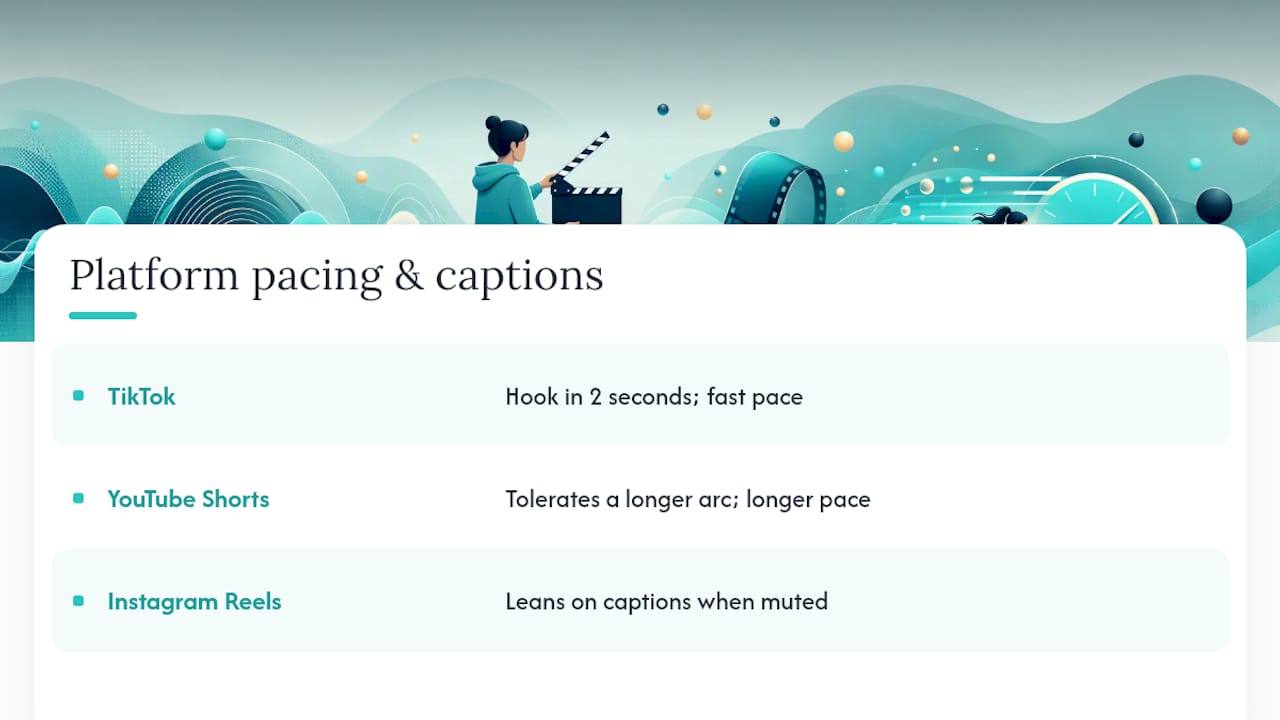
The formats that hold up: AITA-style confessions, workplace betrayal stories, relationship drama with a twist ending, serialized romance or fictional episodes, and Reddit-style first-person narration. Reddit-style narrated templates adapt across TikTok, YouTube Shorts, and Reels, though each platform rewards a different pace: TikTok wants the hook in two seconds, Shorts tolerates a longer arc, and Reels leans on caption text to carry the story when sound is off.
Why these formats specifically? High conflict paired with a clean payoff keeps people watching to the end, and that structure repeats cleanly, which matters more for a series than any single viral hit. Niche and monetization should match from the start. Serialized romance and fiction fit memberships and merch because fans attach to characters. Confession and workplace drama fit ad revenue and sponsorships because the audience is broad and casual.
Pro Tip: Run three formats for six to eight videos each before you commit to one. Retention data after eight episodes tells you more than your gut does after two.
How Do You Write a Drama Script That Keeps People Watching?
Retention lives or dies in the first ten seconds. State the stakes immediately, before backstory, before setup, before anything else.
Beat structure for faceless drama follows a simple arc:
- Hook (0:00–0:10): the conflict or twist, stated plainly
- Setup (0:10–1:30): who’s involved, what’s at stake
- Escalation (1:30 through the midpoint): complications stack
- Reveal and payoff (final third): the twist lands, resolution follows
Runtime depends on format. Long-form serialized drama runs 6 to 12 minutes. Narrated cinematic episodes, the kind built for binge-watching a full story, run 20 to 22 minutes, which matches the standard spec in most freelance narration job briefs. Shorts-based drama series need a self-contained hook every 30 to 45 seconds because there’s no runway to build slowly.
Here’s a short annotated snippet showing the pattern in practice:
That’s a hook, a stake, and a cliffhanger in under fifteen seconds. Everything after it earns the payoff.
What Production Workflow Turns a Script Into a Published Episode?
A faceless drama channel is a production line, not a hobby project, once you’re past episode five. The path from idea to upload follows six steps: story sourcing, script, voiceover, B-roll, edit, then captions, thumbnail, and upload.
- Source and outline the story (30–45 minutes per episode)
- Write the full script with timestamps for narration and B-roll cues
- Record or generate voiceover — human narrator or an AI voice tool
- Source B-roll from stock libraries or generated visuals
- Edit to the script’s beat timing
- Add captions, thumbnail, and metadata, then upload
Tools and outsourcing decisions shape your timeline. AI voice tools cut narration time from hours to minutes; a freelance editor handles the assembly if editing isn’t your strength. DigitalCaver’s tool roundup points to Canva, OpenAI, and CapCut as the common DIY toolchain, and a standard freelance brief for this kind of work specs a 72-hour turnaround for a finished 20 to 22 minute episode with subtitles and a brand kit applied.
A realistic batching week: script two episodes on day one, record voiceover and rough-edit on day two, assemble B-roll and polish on day three, finish captions, thumbnails, and upload on day four. Repeat every two weeks for a steady four-episode release cadence.

Pro Tip: Build a brand kit once, covering color grade, lower-thirds, and fonts, and every future episode looks like it belongs to the same channel instead of four different projects stitched together.
How Much Money Can a Faceless Drama Channel Make?
Revenue on a faceless drama channel comes from more places than AdSense alone, and the channels earning real money almost always stack streams rather than depend on one.
- AdSense: baseline revenue tied to watch time and RPM
- Sponsorships: brand deals once you have a consistent audience size
- Affiliate links: works well for review-adjacent or advice-driven drama spinoffs
- Memberships and Patreon: strongest fit for serialized fiction with recurring characters
- Merch and licensing: viable once a series has real fan attachment
RPMs in low-value niches run roughly $2 to $5, but channels that combine AdSense with affiliate marketing and sponsorships can earn three to five times more per view than ad-only channels chasing the same audience.
Format determines which stream converts best. Serialized romance and fiction convert well into memberships because fans want more of specific characters. Confession and workplace drama monetize best through ad revenue and sponsorships, since the audience is wide but less attached to any single storyline. NoodleTomato’s niche earnings data puts top channels in the Billionaire CEO Romance niche around $13,100 a month, evidence that serialized romance is one of the stronger monetization plays in the category right now.
To pitch a sponsor once you’re mid-size, package your average views, audience demographics, and a sample integration script. Sponsors want proof you can weave a mention into a drama beat without breaking the story, not just a pre-roll ad read.
How Do You Optimize a Faceless Drama Channel for Growth?
Thumbnails and titles need to state the stakes and stay readable at thumbnail size, which rules out long sentences or cluttered text. Consistent series branding, same font, same color treatment, same corner logo, helps viewers recognize a new episode in their feed before they even read the title.

Playlist structure matters more for drama than most genres. A serialized playlist keeps average view duration climbing, because a viewer who finishes episode one often clicks straight into episode two.
Track these metrics weekly, not monthly:
- Average view duration: the clearest signal of whether your hook and pacing work
- Relative retention: how you perform against similar videos on the platform
- Click-through rate: whether your thumbnail and title earn the click
- Series binge rate: the percentage of viewers who move from one episode to the next
Test upload frequency in small increments. Jumping from one episode a week to daily uploads usually costs quality before it buys growth.
What Legal Risks Should Faceless Drama Creators Avoid?
Never present a real, identifiable person’s story as fact without a signed release or verified public record. Fictionalize names, locations, and identifying details when a story comes from an unverified submission, and keep a short internal note on what you changed and why. Check licenses on every stock clip and music track, and keep a backup source ready if a license gets pulled later.
Pro Tip: Log the source and license for every episode’s footage and story. A five-minute log entry now saves a scramble later if someone disputes a claim.
How Does an Episodic AI Platform Solve Faceless Drama Production at Scale?
Continuity is the thing that breaks most faceless drama channels once they try to scale. A character’s face changes between episodes, the tone drifts, and viewers notice. Iguanify addresses this directly by generating a series bible and recurring cast from a single premise, so the same characters carry across an entire season instead of resetting with every AI-generated clip.
- Script-to-episode automation from one premise
- Recurring cast continuity across episodes
- Series bible generation for tone and plot consistency
- Poster and asset outputs ready for YouTube, Shorts, and TikTok
The gap between a channel that looks improvised and one that looks like a real show usually comes down to one thing: whether the same face plays the same character in episode nine as it did in episode one.
A single premise can become a full season pack, delivered with episodic outputs ready to publish, and you keep full rights to everything produced. That combination, speed plus continuity plus ownership, is what turns a one-person channel into something that scales past what manual editing ever could.
Lessons From Running a Faceless Drama Channel
Consistency beats virality. Channels that publish on a steady cadence and build a library of episodes compound faster than any single video that spikes and fades. Editor turnover and AI voice pacing issues are the most common quiet killers, so lock a brand kit early. Start today: pick one format, batch three episodes before you publish any of them.
Ready to Scale Your Faceless Drama Channel?
Every workflow above still asks you to be the bottleneck: scripting, sourcing, editing, and keeping characters consistent across a season by hand. Iguanify removes that bottleneck by turning a single premise into a full season pack, with the same cast, same tone, and same visual identity from episode one through the finale, delivered ready for YouTube and TikTok with no editing team required.
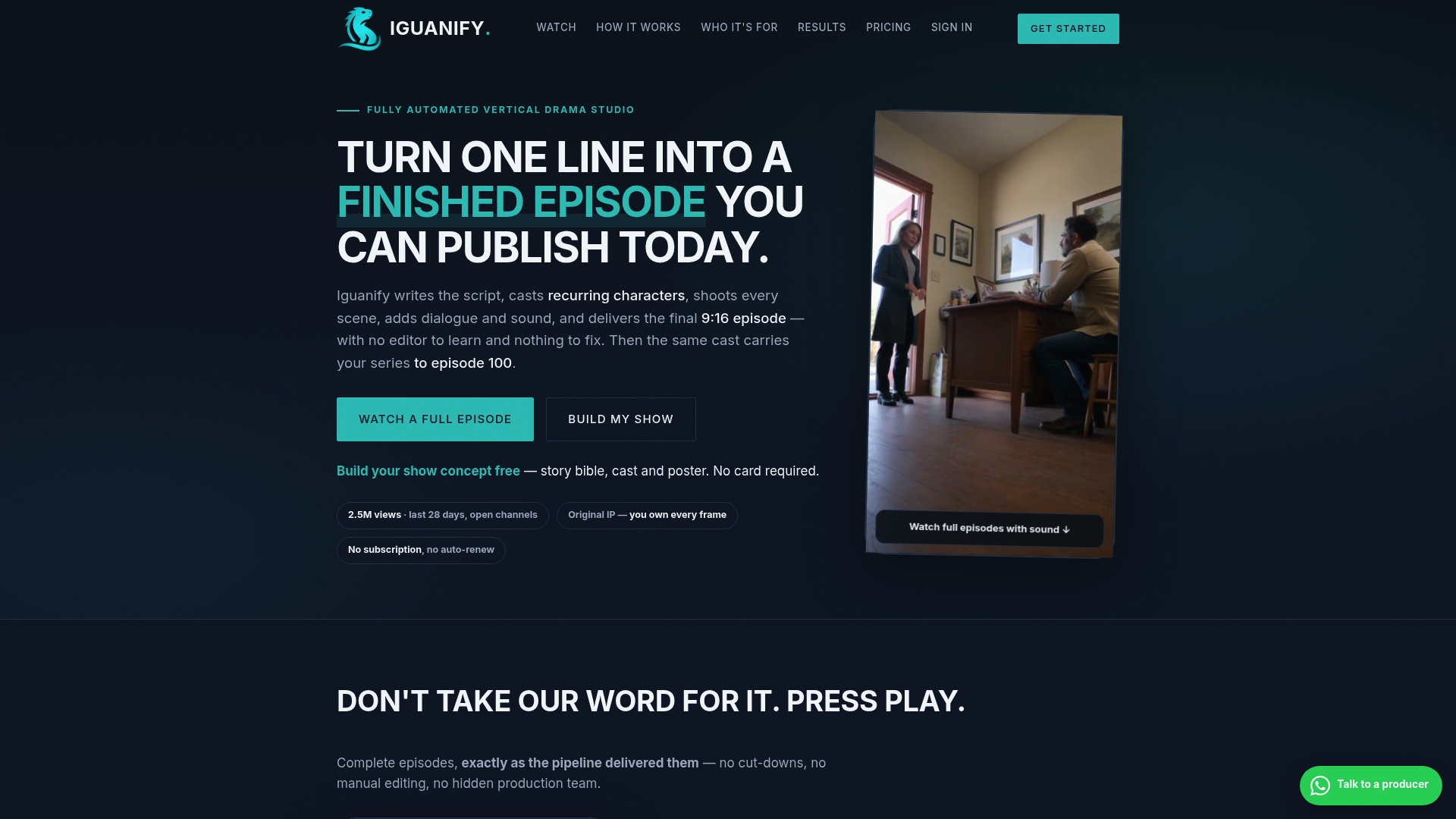
You keep full ownership of everything produced, and there’s no subscription to manage, just credits for the episodes or seasons you actually need. If you want to see how your idea translates into a real series, start with a free show concept and cast generation on the AI drama generator page, then decide whether a single episode pack or a full season fits your publishing plan.
Frequently Asked Questions
What is a faceless drama channel? It’s a YouTube channel that tells narrative stories, confessions, or serialized fiction using voiceover and B-roll or animated visuals, with no host ever appearing on camera.
How much can a faceless drama channel earn? It varies widely by niche and revenue mix. NoodleTomato puts top channels in strong niches like Billionaire CEO Romance around $13,100 a month, while ad-only channels in low-RPM niches often earn far less per view than channels that add sponsorships and affiliates.
Do I need to show my face to grow a drama channel on YouTube? No. Retention and format consistency drive growth more than host presence, especially in confession, AITA, and serialized fiction formats where the story carries the video.
How long should faceless drama videos be? Long-form serialized drama typically runs 6 to 12 minutes, narrated cinematic episodes run 20 to 22 minutes, and Shorts-based series need a self-contained hook every 30 to 45 seconds.
Is it legal to use real drama stories from Reddit or submissions? Only with caution. Fictionalize identifying details unless you have a signed release or verified public record, and keep a sourcing log for each episode in case of a dispute.
Sources
- 25 Faceless Content Ideas to Earn $1,000 in 2 Weeks — Crayo AI Clip Creation Tool
- Reddit Story Video Maker | Faceless Video
- 16+ Faceless Content Ideas That Go Viral | DigitalCaver
- Video Editor: Faceless Youtube Narration (2117626) - Freelance Job - Guru