 IGUANIFY
3 Question Test and Idea Bank for Episode Cliffhangers for Creators
A cliffhanger works when it creates one precise, urgent question that forces the protagonist into a new, specific action. It fails when it only produces a vague feeling like “something bad might happen.” The test is simple: after you read your ending, ask what your main character has to do next. If the answer is fuzzy, the cliffhanger is fuzzy. This article gives you a categorized idea bank, a repeatable drafting method, and short-form rules built for episodic and vertical video creators.
TL;DR:
- Strong cliffhangers must pose a precise, urgent question that directly prompts the protagonist to take a specific action next.
- The most effective ending formulas include mid-crisis cuts, shocking revelations, ethical dilemmas, control reversals, and irreversible actions, each suited for different story tones.
- To create earned, impactful cliffhangers, writers should craft scenes with clear payoff objects and ensure the cliff’s question grows naturally from earlier story points.
- Short-form episodes require concise, locating-friendly cliffhangers that summarize immediate payoff, pose one key question, and make subsequent episodes easy to find.
- Balancing intense and quiet cliffhangers prevents fatigue, while aligning questions with episode length and character arcs enhances emotional depth and storytelling trust.
Table of Contents
- Episode Cliffhanger Ideas: A Categorized Bank You Can Use Today
- How to Build and Test a Cliffhanger That Feels Earned
- Short-Form Cliffhanger Rules for 15 to 90 Second Episodes
- Pacing and Avoiding Cliffhanger Fatigue
- Matching Cliffhangers to Episode Length and Format
- Common Mistakes That Weaken a Cliffhanger
- Using Cliffhangers to Deepen Character, Not Just Plot
- A Cliffhanger That Taught Me More Than It Should Have
- Turning These Ideas Into Finished Episodes Faster
- Sources
Episode Cliffhanger Ideas: A Categorized Bank You Can Use Today
Most strong endings fall into a small number of reliable patterns. Novela Studio identifies five formulas that recur across genres and formats: the mid-crisis cut, the shocking revelation, the unexpected arrival, the ticking clock, and the caught-in-the-act moment. The categories below expand on those formulas and add a few patterns that work especially well for character-driven and short-form storytelling.
Each idea includes a one-line setup, a cut image (the last thing your audience sees or hears), an intensity rating, and the format it suits best.
Mid-crisis or peril cliffhangers
These cut the action at the worst possible instant, before resolution.
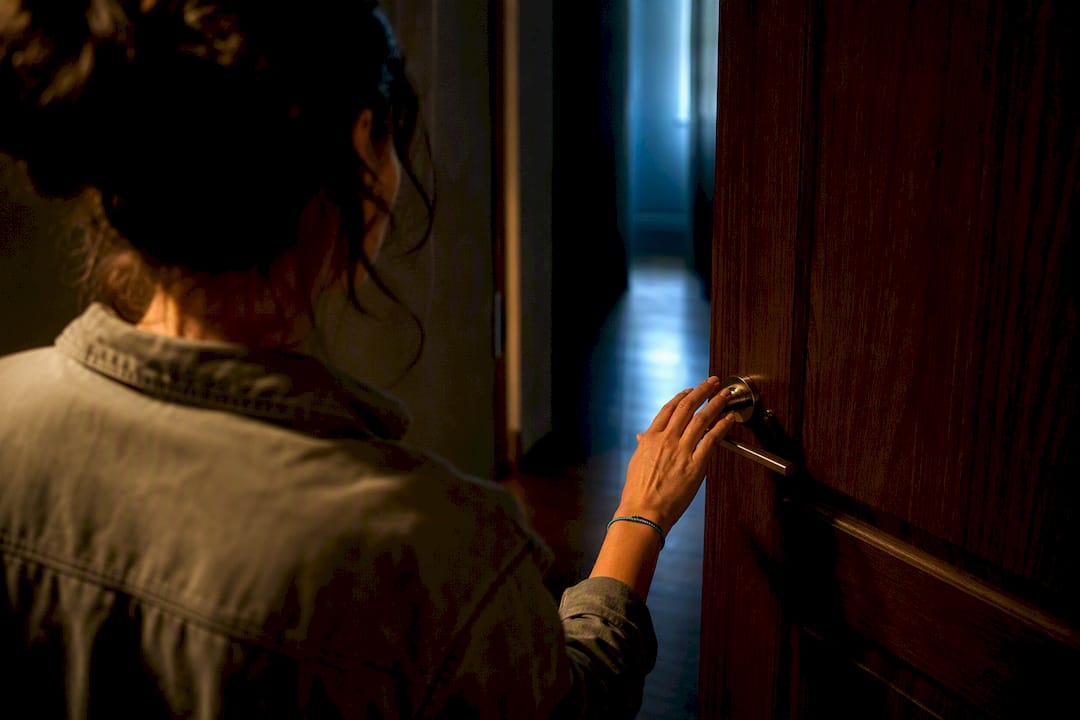
- A character reaches for a doorknob mid-sentence as an alarm blares. Cut: hand freezes on the handle. (High intensity, episode/scene)
- The floor gives way under a character’s foot during a rescue attempt. Cut: falling shadow against a flashlight beam. (High, scene)
- A car engine dies in the middle of a chase, on a bridge, at night. Cut: headlights of the pursuing vehicle in the rearview mirror. (High, episode)
- A surgeon’s hands hesitate over an open incision as the monitor flatlines. Cut: freeze on the trembling hand. (High, episode)
- A hiker’s rope snaps mid-climb. Cut: rope end whipping in the wind. (High, short-form)
Shocking revelation cliffhangers
These reframe everything the audience thought they knew.
- A letter reveals the “dead” parent has been alive the whole time. Cut: signature on the last line.
- A DNA test result appears on screen; the character’s face goes blank before we see the number. Cut: their expression, not the result.
- The trusted mentor’s photo turns up in a folder labeled with the villain’s name. Cut: the folder tab.
- A voicemail plays, and the “stranger’s” voice matches someone already in the room. Cut: the listener’s eyes lifting slowly.
- The will names an heir nobody expected. Cut: the lawyer’s pause before reading the name aloud.
Forced choice and ethical dilemma cliffhangers
These strand the protagonist between two costly options.
- Save one of two people; the rope can only hold one. Cut: hand hovering between two grips.
- Expose a friend’s secret or let an innocent person take the blame. Cut: the accused looking directly at the protagonist.
- Take the bribe that saves the family business or report it and lose everything. Cut: the envelope on the table.
Control reversal cliffhangers
The person who seemed powerful loses the upper hand, or vice versa.
- The hostage grabs the gun. Cut: the captor’s hands, now empty, raised.
- The “victim” reveals they orchestrated the whole scheme. Cut: a slow, knowing smile.
- The CEO who fired the intern discovers the intern now owns the controlling shares. Cut: the stock certificate on the desk.
Irreversible action cliffhangers
Something has been done that cannot be undone.
- A character mails the confession letter, then immediately regrets it. Cut: mailbox lid closing.
- The antidote gets poured down the drain by mistake. Cut: the empty vial.
- A wedding vow is spoken to the wrong understanding of the truth. Cut: rings exchanged.
Quiet or emotional cliffhangers
Not every ending needs sirens. A lowered voice can be just as gripping. MasterClass notes that varying intensity, including quieter emotional beats, keeps a series from feeling repetitive.
- A character says “I need to tell you something” and the scene cuts before they speak. (Medium, episode)
- Two characters lock eyes across a crowded room after years apart. Cut: neither one moves. (Low, scene)
- A single tear falls as a character reads an old text thread. Cut: phone screen dimming. (Low, short-form)
Visual or impossible evidence cliffhangers
A single image contradicts everything the audience believed.
- A photo shows the “victim” laughing at their own funeral, taken that morning.
- A security camera timestamp proves the alibi is impossible.
- A birthmark on the “stranger” matches the missing sibling exactly.
Ticking clock cliffhangers
A deadline gives the next episode built-in urgency.
- A countdown reaches ten seconds as the screen cuts to black.
- A text reads “You have until midnight” with no sender name.
- The plane boards in five minutes, and the character hasn’t decided whether to get on it.
New-entrance or unexpected arrival cliffhangers
Someone walks through the door who should not be there.
- The ex who “moved away” walks into the engagement party.
- A knock at the door reveals the person the character just buried.
- The new hire turns out to be the detective investigating the company.
Process or mistake cliffhangers (for tutorial and creator content)
These work outside fiction, for creators building episodic how-to or product content.
- “I mixed the wrong two chemicals, and here’s what happened next.” Cut: reaction beginning.
- “I hit publish before checking the numbers, and the client just called.” Cut: phone ringing on screen.
Adapt intensity by genre: romance leans on emotional and revelation cliffhangers, thrillers lean on peril and ticking clocks, comedy works best with control reversals played for irony, and science fiction thrives on visual/impossible evidence that breaks the rules of the world you built.
How to Build and Test a Cliffhanger That Feels Earned
The most reliable drafting technique is also the simplest: write the entire scene, including what happens after the tension breaks, then go back and find the peak-tension moment to cut on. Writers Write calls this writing past the cut point, then moving the leftover action into the next chapter or episode. You cannot arbitrarily chop a scene short and expect it to land; you need to know exactly what happens next before you decide where to stop showing it.
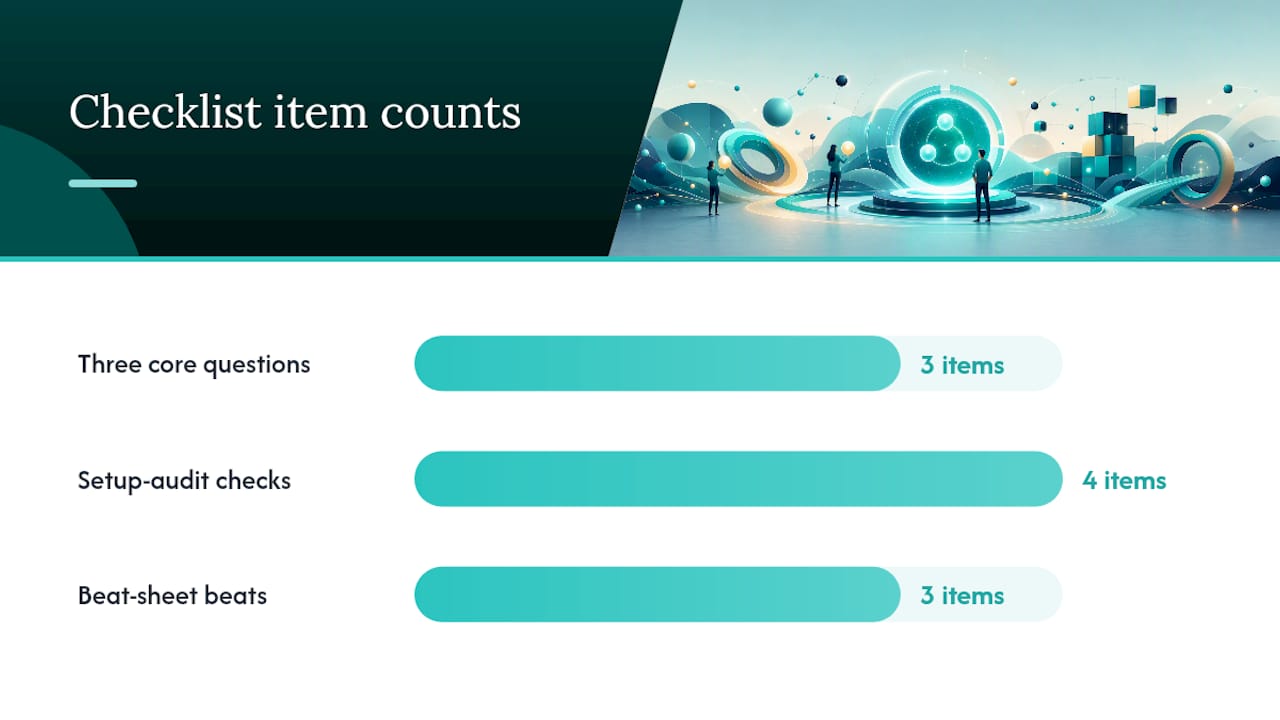
Once you have a candidate ending, run it through three questions.
- Was the final object, rule, or relationship introduced earlier? A gun that appears from nowhere in the last second feels cheap. A gun mentioned in episode two and fired in episode six feels earned. Roboneo frames this as checking whether your ending grows out of anchor points planted earlier in the story.
- Does it change the protagonist’s next action? If your character did the exact same thing next episode regardless of the twist, the twist isn’t doing narrative work.
- Does it create a precise, urgent question rather than a vague feeling? DramaPilot draws a sharp line here: a weak ending produces something like “someone is coming,” while a strong one produces “will she open the door before he reaches the porch, or will she call the number on the card first?” Specificity is what makes the next episode necessary instead of optional.
Before you finalize a cut, run a quick setup audit:
- Has the payoff object or fact appeared on screen or on the page at least once before now?
- Have the character’s choices narrowed enough that this moment feels inevitable rather than random?
- Have stakes escalated steadily, so this cliffhanger tops the last one instead of repeating it?
- Do you already know, in outline form, how the next episode resolves this specific question?
A short beat sheet makes this concrete. Say your episode follows a nurse who suspects a colleague is falsifying charts. Beat one plants a discrepancy in a file. Beat two shows the nurse quietly photographing records. Beat three has the colleague catch her mid-photo. The natural cut point isn’t the confrontation itself. It’s the half second where the colleague’s hand closes around the nurse’s phone, before either says a word. The payoff, whether the colleague blackmails her or covers for her instead, belongs in the opening minute of the next episode, not buried ten minutes in.
Pro Tip: Plan the payoff before you plan the cliffhanger. If you don’t know how episode seven answers the question you raised in episode six, your audience will sense the stall, even if they can’t name why.
Short-Form Cliffhanger Rules for 15 to 90 Second Episodes
Vertical drama and short-form series operate under different physics than a 22-minute TV episode. CapCut’s guide breaks the short-form ending into three jobs done in a matter of seconds: summarize the immediate payoff, open exactly one clear question, and make the next episode easy to find through consistent labels and thumbnails.
That third job gets ignored constantly, and it’s costly. A brilliant cliffhanger that nobody can locate the sequel to is a wasted cliffhanger.
Practical editing rules that follow from this:
- End earlier than instinct tells you to. Trim the last two or three seconds you’d normally leave in.
- Decide your final frame before you shoot or generate the episode, not after editing.
- Write the caption as if sound is off. A large share of short-form viewing happens muted, so the cliffhanger needs to land through text and image alone, not just line delivery.
- Add a one to two second B-roll tease of the next part at the very end, a technique that keeps curiosity high without shortchanging the current episode’s own payoff.
- Use consistent part numbering (“Part 4 of 7”) and a repeatable visual motif on thumbnails so returning viewers recognize the series instantly.
A cooking-tutorial creator might end part one with “I added the wrong ingredient, and the whole pan just changed color,” caption included, before the audio even explains it. A drama creator might end on a slammed laptop and the on-screen text “She just found the messages.” Both do the same job: answer this episode’s question, then plant one new, specific question the caption itself half answers to keep the loop closed enough for trust, open enough for curiosity.
Pacing and Avoiding Cliffhanger Fatigue
Not every ending should scream. MasterClass advises against high-intensity reveals in every single episode, recommending instead a mix of dramatic twists, quiet emotional reversals, and lingering dread. Audiences notice repetition faster than writers do. If every episode ends with a gasp, the gasps stop meaning anything by episode five.
A workable rhythm:
- Reserve your highest-intensity cliffhangers (peril, irreversible action) for genuine turning points, roughly once per arc rather than once per episode.
- Use quieter hooks, an unanswered question, a lingering glance, a half-finished sentence, in the episodes between those peaks.
- Alternate types deliberately: follow a danger cliffhanger with a forced-choice ending, then a quiet emotional one, rather than repeating the same formula back to back.
- Resolve a beat fully, then attach a small new micro-question at the very end, instead of leaving everything hanging every time.
Watch for fatigue signals in comments and drop-off data: viewers calling endings “predictable,” a rising skip rate right before the final seconds, or comment threads that stop guessing and start complaining. Those are your cue to swap formulas, not intensify them. Mapping this rhythm across a season is easier with a structured content calendar that tracks which cliffhanger type you used last.
Matching Cliffhangers to Episode Length and Format
A 45-minute network drama and a 60-second vertical episode both need cliffhangers, but they earn them differently. Long-form TV has room to plant a payoff object three episodes early and let it simmer; a viewer who forgets a detail can rewatch or rely on a “previously on” recap. Short-form has no such cushion. Whatever you plant needs to pay off within the same episode or the very next one, because most viewers won’t wait a week to remember why a locket mattered.
For hour-long or half-hour episodic TV, cliffhangers can carry subplot weight, planting a question that won’t resolve for several episodes while the main plot moves forward normally. Web series and vertical drama compress that structure: one dominant question per episode, minimal subplot juggling, and a payoff that lands within roughly the first third of the next installment. Novelists sit somewhere in between; chapter-end cliffhangers can breathe for a chapter or two, but a reader who has to backtrack ten chapters to remember a clue will likely just close the book.
The practical rule: match your setup-to-payoff distance to your format’s attention span. Long-form can stretch it. Short-form and serialized vertical drama cannot.
Common Mistakes That Weaken a Cliffhanger
The most frequent error is vagueness dressed up as mystery. An ending that implies “something ominous” without specifying what, who, or when reads as filler, not suspense. DramaPilot points out that specific, urgent questions consistently outperform vague hints, because specificity is what makes the audience feel a real answer is coming.
A second common mistake is the unearned twist, a reveal that contradicts information the story already established, rather than building on it. If your background art or dialogue never hinted at the secret, the reveal reads as a cheat, not a payoff. Studies of foreshadowing in visual media, like this catalog of background motifs, show how much groundwork skilled storytellers lay before a reveal even registers as one.
Third, bait-and-switch endings where the next episode simply ignores the cliffhanger, or resolves it in one throwaway line, erode trust fast. Viewers remember being strung along, and they remember it as a series feature, not a one-time slip.
Finally, watch for repetition fatigue (covered above) and overcrowded endings that try to answer two questions at once. One clean question beats two muddled ones every time.
Using Cliffhangers to Deepen Character, Not Just Plot
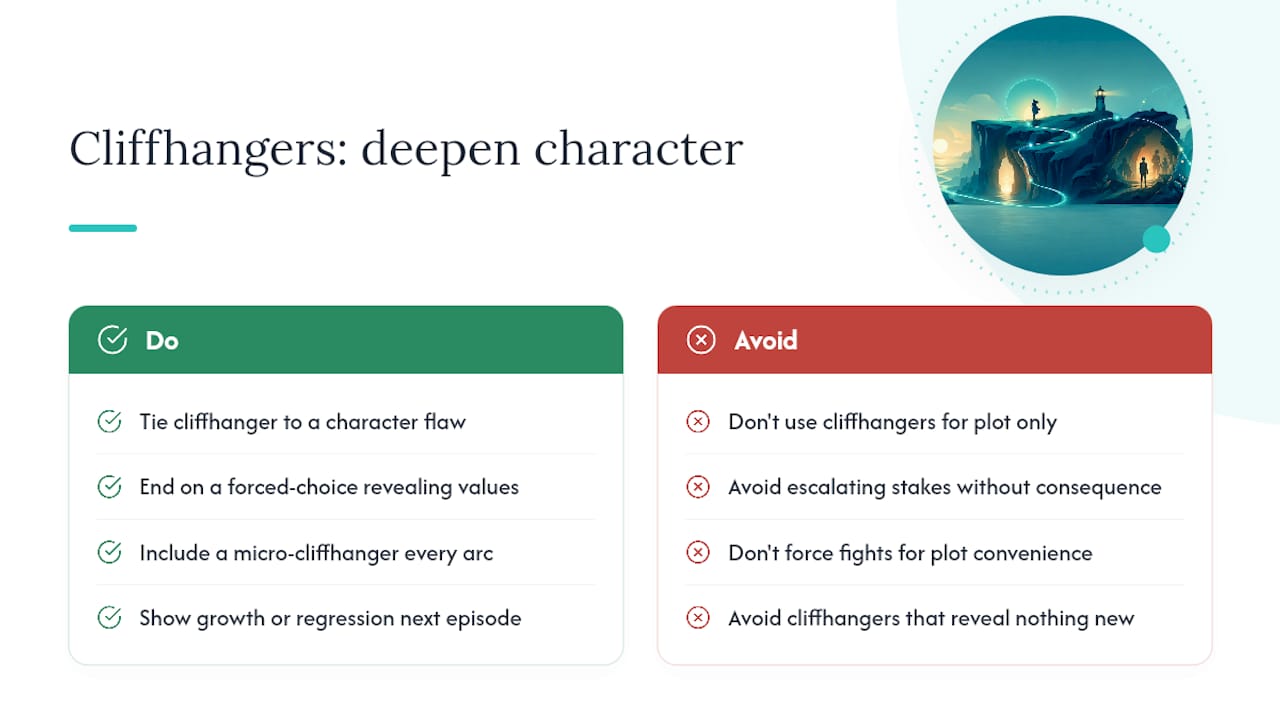
The best cliffhangers do double duty: they raise a plot question and reveal something about who the character is under pressure. A forced-choice ending isn’t just suspenseful because the stakes are high. It’s suspenseful because the choice tells the audience what this character values when nobody else is watching.
Tie your cliffhanger to a character’s established flaw or fear whenever possible. If your protagonist has spent the season avoiding confrontation, end an episode with her forced into one, not because the plot needs a fight, but because her arc needs the test. The cut point becomes a character beat as much as a plot beat, and the payoff in the next episode should show growth or regression, not just resolution.
This is also where quieter cliffhangers earn their keep. A single look, a hesitation before answering a question, a hand that doesn’t quite reach for the phone, these small moments can reveal character shifts that a car chase never could. Weave at least one character-revealing micro-cliffhanger into every arc, even if the surrounding episodes lean on plot-driven peril. Series that only escalate plot stakes without ever pausing on character consequence tend to feel hollow by the finale, even when every individual cliffhanger technically “worked.”
A Cliffhanger That Taught Me More Than It Should Have
The best lesson I’ve absorbed about cliffhangers came from watching a series stumble on its own ending. A tense mid-crisis cut promised a confrontation, and the following episode opened somewhere else entirely, resolving the tension off-screen in a single line of dialogue. The audience felt cheated, not because the twist was bad, but because the payoff didn’t match the size of the question raised. September C. Fawkes makes a similar point: the most addictive cliffhangers cut mid-conflict, at maximum impact, not after the fact, and that impact has to be honored on the other side of the cut.
The practical takeaway is unglamorous but reliable: plan the payoff before you finalize the cliffhanger, and never raise a question bigger than you’re willing to answer. Faster production cycles now let creators test a cliffhanger and its resolution back to back instead of guessing months apart, which makes this discipline easier to practice than it used to be.
— Leonard
Turning These Ideas Into Finished Episodes Faster
Having a hundred cliffhanger ideas doesn’t help much if turning one into a finished, watchable episode still takes a production team, a shoot day, and a week of editing. Some platforms aim to close that gap for solo creators and small teams by building the series bible, recurring cast, script, dialogue, and finished episode around the premise and cut point, keeping characters consistent from one cliffhanger to the next payoff.
That consistency matters more for cliffhanger-driven series than almost any other format, since a payoff only lands if the character on screen in episode two actually looks and sounds like the one who left you hanging in episode one. Some solo creators, faceless-channel operators, and small teams building serialized drama for TikTok or YouTube tend to benefit most, especially when lacking a production crew to fall back on. If you have a cliffhanger idea from the bank above and want to see it as a finished episode instead of a note in your drafts, start with the AI Drama Generator and turn today’s premise into tomorrow’s episode.
Sources
- Tips for writing enthralling cliffhangers — MasterClass
- How to write hooks and cliffhangers for AI short dramas — DramaPilot (Medium)
- How to write cliffhangers: 5 proven formulas — Novela Studio Blog
- Cliffhanger endings for short-form video series — CapCut guide