 IGUANIFY
Create 50 Episodes With One AI Cast: AI Replaces Extras, Not Leads
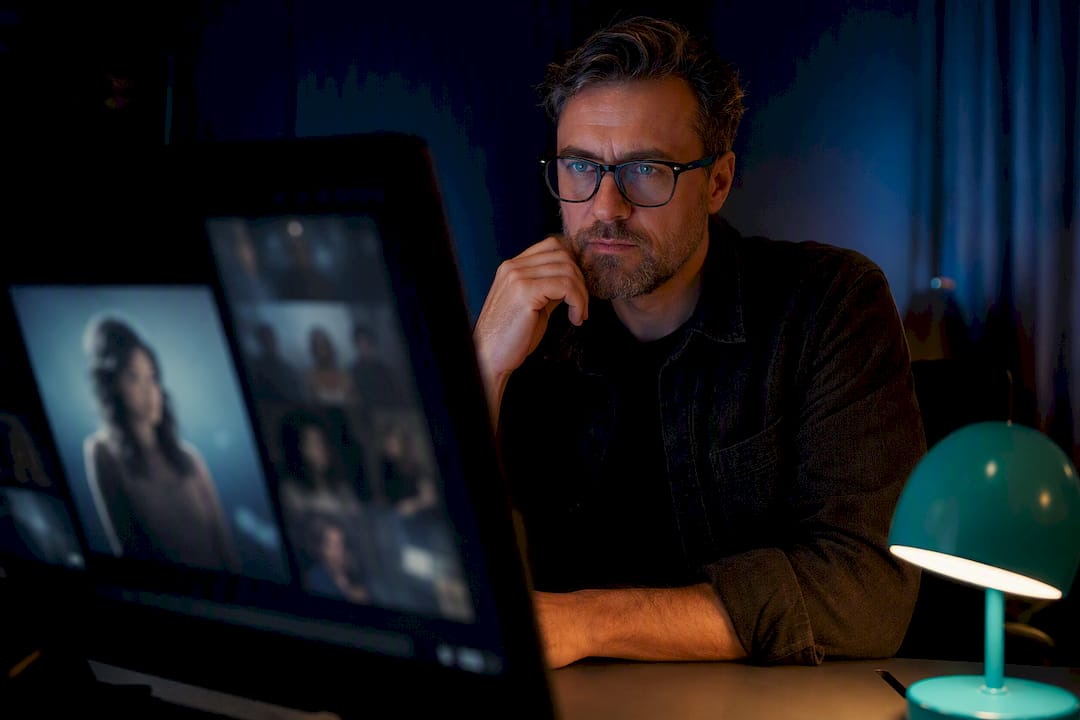
AI will not replace human actors outright, but it’s already displacing specific roles: background extras, ADR voice work, and low-profile parts in short-form “micro-drama” series, a shift SAG-AFTRA has responded to with new consent and compensation rules. For actors, adaptation and likeness protection now matter as much as talent. Some platforms show what serialized, AI-assisted production looks like when built around consistent recurring characters rather than one-off synthetic stunts.
TL;DR:
- AI is primarily used today to generate digital crowds, perform digital de-aging, clone voices for ADR, and handle dangerous stunt replacements.
- Cost savings from AI are significant in volume tasks like crowd scenes and dubbing, but not in lead roles or emotionally central performances.
- Human actors maintain an edge in authenticity, improvisation, and cinematic language, which AI still struggles to replicate convincingly.
- Legal protections now require consent and fair compensation for AI likeness or voice use, with increased audience demand for disclosure.
- Low-budget, high-volume projects are adopting AI more rapidly, while larger productions continue to rely on human talent for key creative moments.
Table of Contents
- How Is AI Actually Used in Film and Video Production Today?
- Where AI Outperforms Human Actors on Cost and Scale
- Where Human Actors Keep the Edge
- What Are the Legal and Union Protections Around AI Likeness Use?
- What Real-World Cases Show About AI Replacing Actors
- How Can Creators Use AI Responsibly Alongside Human Talent?
- How Iguanify Solves Character Consistency for Serialized AI Video
- A Balanced Forecast on AI and the Future of Acting
- Try Iguanify for Serialized, Character-Consistent Episodes
- Sources
How Is AI Actually Used in Film and Video Production Today?
The phrase “AI actors” conjures fully synthetic movie stars, but the real, working use of AI in production is far more mundane and far more widespread than that. Studios aren’t replacing Denzel Washington. They’re replacing the guy standing behind him in a crowd scene.
Production teams currently deploy AI across several concrete tasks:
- Background crowds and extras generated digitally instead of hiring hundreds of day players for a stadium or battle scene
- Digital de-aging, letting an actor play a younger version of a character without prosthetics or a body double
- Voice cloning for ADR, patching dialogue lines without dragging an actor back into a booth
- Digital doubles and stunt replacements, handling dangerous or repetitive physical sequences
- Automated compositing and previsualization, building environments and rough scene blocking before a single camera rolls
A production case documented in the Genvid case study on The Seeker shows AI handling crowds, de-aging, voice cloning, and environment staging in a single project, cutting down some of the schedule and cost burden that traditionally comes with big-cast, big-location shoots.
Pro Tip: If you’re a creator trying to gauge where AI fits your own workflow, look at what task you’re doing, not what genre you’re in. AI adoption tracks tasks (crowds, voice patches, environment builds), not whole productions.
The adoption pattern is telling. Big studios use AI to augment expensive, logistically painful tasks around their human stars, not to replace the stars themselves. Short-form and “micro-drama” platforms, built for vertical video and rapid output, have gone further, swapping entire human casts for AI-generated performers in low-budget projects where audience expectations for craft are lower. Business Insider’s reporting on Hollywood’s micro-drama industry documents actors losing real work to exactly this kind of substitution. That’s the practical split worth understanding: AI in film industry work today is mostly infrastructure, not casting.
Where AI Outperforms Human Actors on Cost and Scale
The reason studios keep expanding AI use isn’t novelty. It’s math. A crowd scene that once required hundreds of extras, catering, permits, and a full location day now costs a fraction of that when generated digitally. Voice dubbing for a low-budget series in multiple languages, historically one of the more expensive post-production line items, gets cheaper when a cloned voice model replaces a booked studio session.
Beyond raw cost, AI brings advantages that have nothing to do with money:
- Repeatability: an AI-generated performer looks identical in take 47 as in take 1, with zero fatigue or continuity slippage
- Exact look replication: no lighting mismatch between reshoots months apart
- Scheduling flexibility: no waiting on an actor’s availability, union hours, or travel
- Consistent output at scale: useful for ad variants, background plates, and large crowd sequences that would otherwise require duplicating footage
Forbes’ analysis of Hollywood’s economics makes the case plainly: the cost and speed advantages of synthetic performers are strong enough that adoption in low-budget production contexts will keep climbing, regardless of proposed taxes or restrictions aimed at slowing it down.
Pro Tip: Advantages of AI actors show up fastest in volume work, ad variants, filler background shots, repeated dubbing passes, not in the scenes an audience actually remembers.
This is where virtual actors performance genuinely earns its place in a budget. Nobody’s chemistry read gets replaced by an algorithm. But nobody misses the extra standing in the back of a diner scene either.
Where Human Actors Keep the Edge
Cost and repeatability are AI’s strengths, and they happen to be irrelevant to the parts of acting audiences actually respond to. A human actor’s micro-expressions, the flicker of hesitation before a hard line, the improvised beat that a scene partner didn’t expect, come from lived experience that no training dataset replicates on demand.
Star-driven economics reinforce this. Audiences pay a premium for authenticity they can name: a specific face, a specific voice, a career’s worth of context they bring into the theater with them. That premium doesn’t transfer to a synthetic performer, however polished the render.
The technical gap matters too. Generating a convincing frame is different from generating a convincing film. Microsoft Research’s FilMaster project built its entire approach around this exact problem: encoding cinematic principles like camera language and editing rhythm into generative pipelines because off-the-shelf AI video consistently fails at them.
Cinematic camera language and rhythmic editing remain the core gaps that separate AI-generated footage from professional filmmaking, gaps researchers are now trying to close by building cinematic rules directly into the generation process rather than hoping they emerge on their own.
Separate research backs this up from the creator side. A survey of generative video tools found that character consistency, camera control, and motion continuity are the hardest unsolved problems creators run into, the exact traits a convincing “AI actor” would need to hold across a scene, let alone a series.
What this adds up to:
- Lead roles and emotionally central scenes remain human-dominated because audiences buy authenticity, not just a face
- Improvisation and scene-partner dynamics are still outside what generative pipelines reliably produce
- Camera language and edit rhythm, the actual grammar of cinema, are documented technical weak points, not marketing spin
- As AI-generated content spreads, live and unmistakably human performance may carry a growing premium simply because it’s rare
What Are the Legal and Union Protections Around AI Likeness Use?
The fastest-moving part of this story isn’t the technology, as highlighted by The American Film Association (AFA)'s emphasis on industry transparency in film. It’s the contracts. SAG-AFTRA’s strike action produced concrete protections that now shape how studios can legally use an actor’s face or voice in AI-driven work, and those terms are worth knowing whether you’re an actor, a producer, or a creator experimenting with synthetic performers.
- Consent is required before a studio can create or use a digital replica of a performer’s likeness or voice.
- Compensation terms apply when an existing likeness is scanned, cloned, or reused in new AI-generated material.
- Unconsented use is restricted, closing the door on quietly training a model on old footage and generating new performances without the original actor’s agreement.
Outside of union contracts, the murkier legal questions involve voice licensing terms, whether training data pulled from pre-existing footage carries hidden rights issues, and who holds liability when a cloned voice says something the real actor never agreed to. None of that is fully settled law yet, and productions that skip the paperwork are taking on real exposure, not just an ethical shortcut.
There’s an audience-facing expectation forming alongside the legal one: disclosure. Viewers increasingly expect to be told when a performer on screen is AI-generated, and creative credit questions, who gets billed, who gets paid, follow directly from that. A summary of current AI-actor risk factors frames 2026 as the year these consent and compensation questions moved from union talking points to enforceable contract language.
What Real-World Cases Show About AI Replacing Actors
A handful of recent stories have done more to shape public opinion on this topic than any white paper.
- Tilly Norwood, a fully synthetic performer positioned for a starring role, triggered exactly the reaction the industry had been bracing for. Coverage in the LA Times documented both audience discomfort and union pushback, a signal that “can AI replace actors” isn’t just a technical question, it’s a trust question.
- Micro-drama displacement is already measurable, not hypothetical. Business Insider’s reporting on the vertical short-form space shows real actors losing real bookings to AI-generated casts in low-budget serialized projects.
- Studio experiments with digital doubles for de-aging and stunt work, the kind seen in the Seeker case study, show the opposite pattern: augmentation around a human star rather than replacement of one.
The lesson across all three: adoption speed tracks budget and visibility. Big, star-driven projects use AI to support human performers. Low-visibility, high-volume projects use AI to skip hiring them entirely. Interestingly, even filmmakers skeptical of full automation are experimenting with AI upstream of the camera. Martin Scorsese has publicly backed AI tools for storyboarding and pre-production, a use case that has nothing to do with replacing his actors and everything to do with planning shots faster.
How Can Creators Use AI Responsibly Alongside Human Talent?
If you’re producing anything that blends real performers with AI tools, a short checklist keeps you out of trouble and keeps the work credible:
- Get written consent before scanning, cloning, or generating any likeness or voice.
- Set payment terms up front for how likeness use gets compensated, not after the model is trained.
- Disclose synthetic performers to your audience rather than letting them find out later.
- Keep human-led takes for key emotional beats, reserving AI for scale tasks like crowds, dubs, and background work.
A hybrid workflow, capture the real performance first, then use AI to extend, dub, or scale it, tends to produce the most credible result while avoiding the ethical and legal landmines of purely synthetic casting.
Pro Tip: Actors protecting their careers should document every likeness and voice agreement in writing, even for small projects, and treat live-performance work, theater, live comedy, hosting, as a growing niche precisely because it can’t be cloned.
An AI video production guide walks through exactly this kind of hybrid approach for creators building out a full episode pipeline.
How Iguanify Solves Character Consistency for Serialized AI Video
The hardest unsolved problem in AI video isn’t generating one good shot. It’s generating the same character, correctly, across ten episodes. Most tools that ace a single clip fall apart the moment continuity matters, a face that drifts, a voice that shifts, a wardrobe detail that vanishes.
Iguanify was built around solving exactly that gap. The platform produces finished episodes from a single line of script while maintaining recurring cast members across a full series, addressing the continuity failure that undermines most AI-generated serialized content. Creators keep full ownership of what gets produced, and the approach to keeping one face across episodes removes a technical barrier that has otherwise limited AI-assisted storytelling to short, disconnected clips.
Used responsibly, this kind of tool sits alongside human talent rather than against it: a creator can still cast real voice actors or human-led segments for key emotional beats, then rely on consistent AI cast members for the connective, high-volume parts of a series.
A Balanced Forecast on AI and the Future of Acting
The evidence points to displacement at the edges, not collapse at the center. AI is already absorbing crowd work, dubbing, and low-visibility roles, while lead performances still depend on the unpredictability and lived experience only a human brings. The future of acting with AI likely looks like specialization: performers who protect their likeness rights and lean into live, irreplaceable work, alongside creators who use hybrid AI production for everything else. Learn the tools now, document your rights early, and treat both paths as viable rather than competing.
— Leonard
Try Iguanify for Serialized, Character-Consistent Episodes
If you’re a creator weighing whether to fight for a full production crew or lean on synthetic performers with no consent framework, there’s a third path: build the series yourself, faster, and own every frame of it. Iguanify turns a single premise into finished episodes with a recurring cast that stays consistent from episode one through episode fifty, no re-casting, no continuity drift, no production team required.
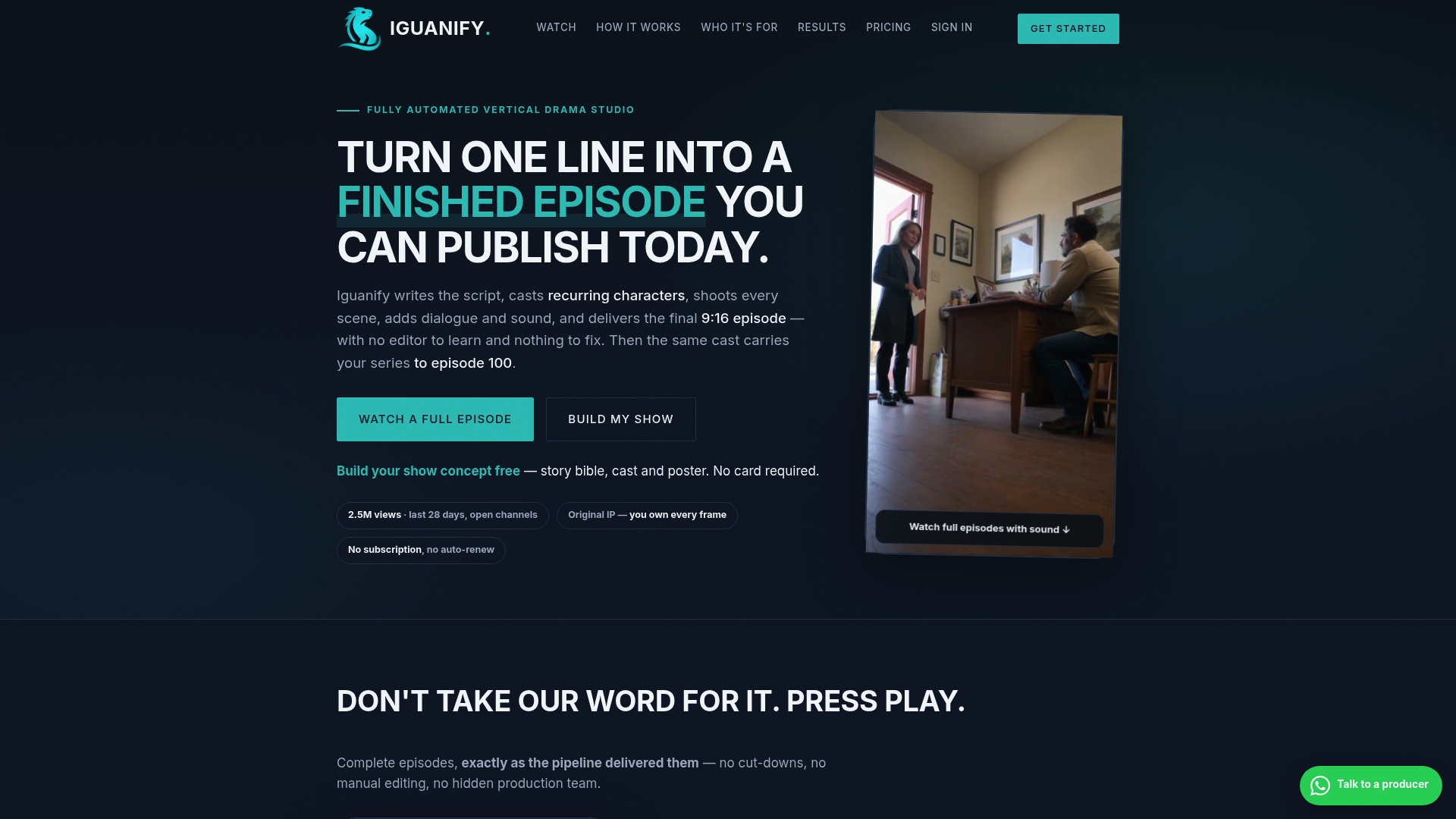
You get full rights to what you produce, and the output is ready to publish directly to TikTok, YouTube, or Instagram without an editing pass. If you’re producing serialized vertical drama and tired of watching AI tools lose track of your own characters, preview a concept on the AI Drama Generator page and see what a consistent cast looks like before you commit to an episode pack.
Sources
- The Seeker case study | Genvid
- FilMaster: Bridging cinematic principles and generative AI for automated film generation | Microsoft Research
- Actors losing jobs to AI in Hollywood micro-drama industry | Business Insider
- Hollywood’s new math favors AI actors over human actors | Forbes