 IGUANIFY
Episode Release Strategy: 2 Episodes First, Then Go Weekly

Start with a hybrid: launch two or three episodes together, then go weekly. A randomized field trial found that gradual releases kept viewers coming back far more than all-at-once drops. Binge still wins for pure discovery. The sections below lay out the evidence, the decision rules, and the production steps to make your cadence sustainable.
TL;DR:
- The 2025 randomized trial of 84,000 viewers found gradual releases raised the likelihood of continuing on the platform by 48% versus simultaneous releases.
- Parrot Analytics found binge launches peak 1.5–1.7x higher in daily demand, while weekly releases burn demand 31–37% slower and sustain engagement 18–25 days longer.
- Choose binge when acquisition is the priority and marketing can capture the launch spike; weekly releases suit retention, but heavy binge audiences may resist them.
- Before committing to a season cadence, test a pilot batch against a weekly release with separate small audiences, then compare completion and return rates.
- Bank a full season for binge, a premiere batch plus two spare episodes for hybrid, or two to four episodes for weekly releases.
Table of Contents
- What do binge, weekly, and hybrid releases actually mean?
- What does the research say about acquisition versus retention?
- How do you pick a cadence for your goal, genre, and scale?
- How do you build a production calendar you can actually sustain?
- Why has hybrid become so common in practice?
- A creator’s view on cadence and constraints
- How can we help you hold your cadence?
- FAQ
- Sources
What do binge, weekly, and hybrid releases actually mean?
Names get used loosely, so here is how we use them. Binge means every episode of a season goes live at once. It rewards discovery and gives you a big launch spike, because anyone who finds the show can finish it in a weekend. Weekly means one episode per scheduled slot. It builds appointment viewing and keeps the show in conversation for weeks. Hybrid, also called batch, means a premiere drop of two or three episodes followed by one episode per week. Creators reach for it when they want momentum on day one and a reason for viewers to return.
How the three feel to the audience and to you:
- Viewer experience: binge lets people control pace, weekly asks them to wait, and hybrid gives a real taste before the wait begins.
- Spoiler risk: highest with binge, where friends finish at different speeds, and lowest with weekly, where everyone moves together.
- Marketing cadence: binge needs one concentrated push, weekly needs a steady drumbeat, and hybrid needs both a launch push and a weekly rhythm.
What does the research say about acquisition versus retention?
The strongest evidence comes from a 2025 randomized trial covering 84,000 viewers, which found that a gradual release raised the likelihood of viewers continuing on the platform by 48% compared with an all-at-once release. Viewers on the drip schedule also returned weekly and explored more of the catalog. INFORMS describes the same experiment and explains why: each weekly drop is a natural touchpoint that pulls people back in.
Industry analytics add the other half of the picture. Parrot Analytics found these patterns:
- Binge releases often peak 1.5–1.7x higher in daily demand at launch.
- Weekly releases burn audience demand 31–37% slower.
- Weekly seasons stay engaging for roughly 18–25 more days.
The takeaway: binge buys you the loudest opening, and weekly buys you the longest tail. Audiences are not uniform, though. Heavy binge-watchers prefer all-at-once releases, which can blunt the drip effect for shows that attract them. Binge-watching itself is also not uniformly good or bad for viewers, so don’t treat the launch spike as proof of a healthy audience.
How do you pick a cadence for your goal, genre, and scale?
Treat the choice as a three-way trade-off: discovery, sustained engagement, and control over buzz. Then match the cadence to the one you need most.
- Choose binge when discovery is the goal and you have marketing ready to capture the spike. Smaller acquired shows often benefit from bingeing.
- Choose weekly when retention matters most. Tentpole titles often use weekly drops to build buzz and repeat visits.
- Choose hybrid when you want an opening burst and long-term return visits from the same release.
Genre and scale shift the call. A serialized drama with cliffhangers rewards the wait of a weekly slot. A short-form, social-first series can lean on frequent small drops, because platform feeds punish silence. A kids’ show often suits binge, since families watch on their own schedule.
Pro Tip: Test before you commit. Release your pilot batch to a small audience, hold a second small audience on a weekly drip, and compare completion and return rates before you lock the full season’s cadence.

How do you build a production calendar you can actually sustain?
Cadence fails at the production desk, not in the strategy deck. Podcast scheduling guidance makes the same point: an editorial calendar and pre-batched episodes are what prevent a show from fading out. Build yours this way:
- Track publish date, episode number, topic, featured guest or character, and format in one calendar.
- Bank a buffer before launch: a full season for binge, a premiere batch plus a spare-episode buffer for hybrid, or a rolling buffer for weekly.
- Schedule promotion around each drop: a teaser beforehand, a push on release day, and a mid-week reminder or community prompt.
- Review analytics once a week and adjust the next batch, not the one already live. Our weekly analytics workflow shows one way to do it.
| Model | Episodes to bank before launch |
|---|---|
| Binge | Full season |
| Hybrid | Premiere batch of 2–3 plus a buffer |
| Weekly | Rolling buffer |
If you want a longer planning walkthrough, our guide to planning episodes and locking your cadence covers the backlog side in detail.
Why has hybrid become so common in practice?
Hybrid exists because neither pure model covers both jobs. Luminate’s analysis describes a “graduation” pattern: some streamers debut a first season as a binge to win discovery, then shift to weekly or hybrid cadences once a show has an audience worth retaining.
- A premiere batch preserves the discovery benefits of a binge and gives new viewers enough episodes to get hooked.
- The weekly tail captures the retention effect the randomized trial measured, and the same Carnegie Mellon summary points to hybrid launches of two or three episodes as a common practitioner choice.
- There is still no single industry standard. Streamers choose title by title, and analytics from earlier seasons push those decisions toward the middle.
A creator’s view on cadence and constraints
Leonard here. The pattern I see most often is a strong strategy that dies because the backlog ran dry. Chasing whatever cadence is trending this quarter is a trap. The cadence you can hold for a full season beats the theoretically perfect one you abandon. Pick the rhythm your production can survive, protect your buffer, and let the data from your own audience, not someone else’s launch, tell you when to change it.
— Leonard
How can we help you hold your cadence?
Whatever model you pick, it only works if episodes exist before the calendar demands them. We built our platform for exactly that: you give us a premise, and we produce finished episodes with recurring characters kept consistent from one to the next, delivered ready to post.
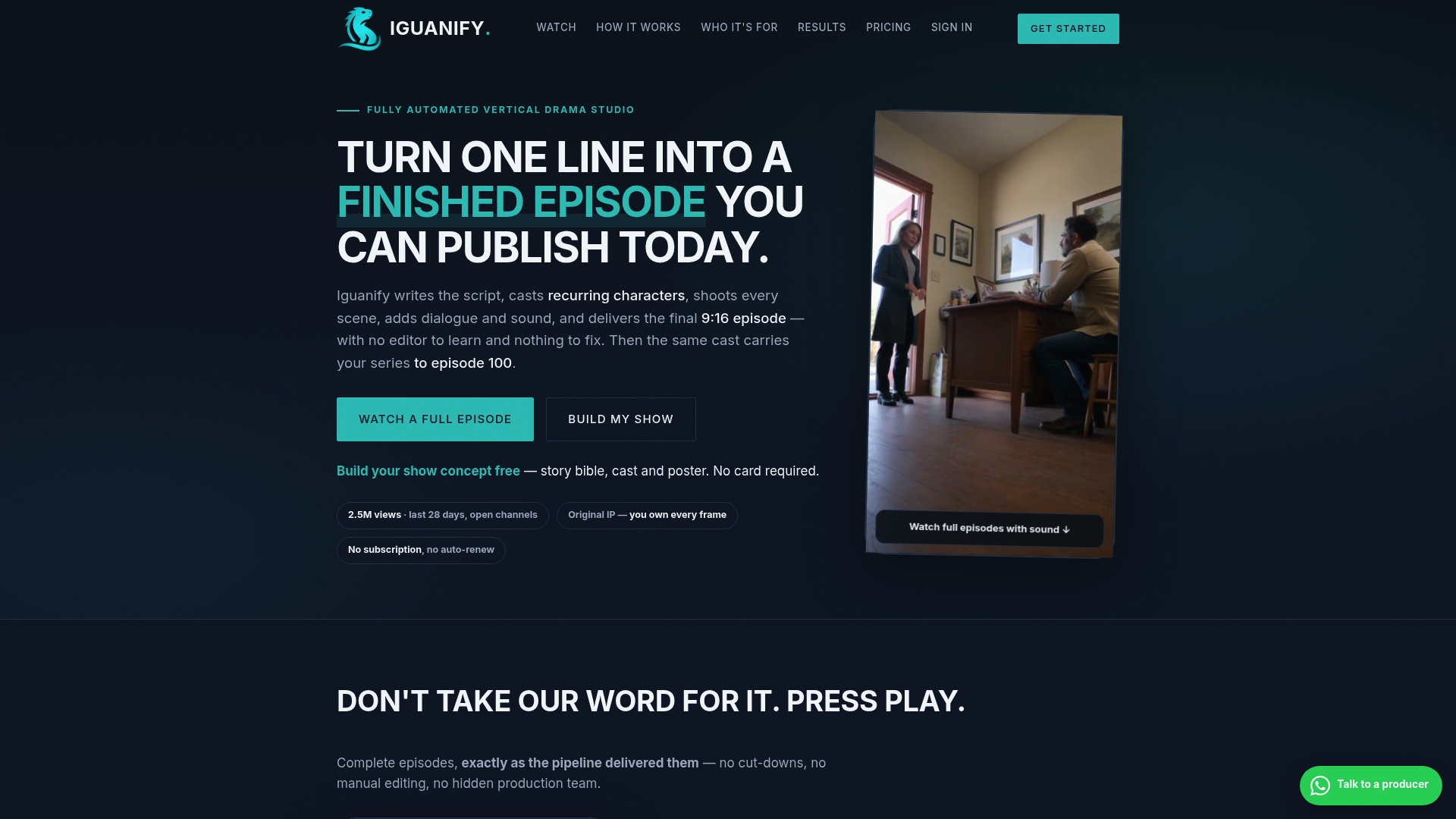
- Pre-produce a premiere batch and a weekly buffer before you announce a date.
- Keep the same cast and look across every drop in the season.
- Publish consistently to TikTok, YouTube, and other platforms, with full rights to the episodes.
A standard episode is $34.99 per episode. Start there, or try our self-serve engine to bank your first batch today.
FAQ
Why do shows release one episode a week?
Weekly releases create appointment viewing and keep a show in conversation for longer. A randomized trial found that gradual releases improved viewer retention compared with all-at-once drops.
What are the potential benefits of binge-watching?
Binge releases drive the biggest launch spike and make a show easy to discover and finish quickly. Research on binge-watching is mixed, and it can be a positive experience for many viewers.
What is the best episode release strategy for a new creator?
A hybrid is a safe default: release two or three episodes at launch, then go weekly. It gives new viewers enough to get hooked and gives returning viewers a reason to come back.
How big should my episode buffer be?
Bank a full season for a binge, a premiere batch plus two spare episodes for a hybrid, or a rolling two to four episodes for a weekly show. The buffer is what keeps the schedule intact when life interrupts production.
Sources
- For Video-on-Demand Platforms, Release Strategy Matters: Streaming Episodes Gradually Boosts Consumers’ Searches, Subscription Rates | Carnegie Mellon University’s Heinz College
- Release Strategy Guide Ep 1: Back to the Future | Parrot Analytics