 IGUANIFY
Creator Content Ownership: Keep Your Rights When You Scale Production
You own the copyright to your video, photo, or written post the moment you hit record or save the file. That protection is automatic and doesn’t require a lawyer, a filing, or a stamp. But automatic ownership isn’t the same as enforceable ownership. If your work gets stolen or a brand deal buries a rights grab in paragraph twelve, registration and a clear contract are what actually let you fight back.
TL;DR:
- Registering your work with the Copyright Office within three months of publication allows you to claim statutory damages and attorneys’ fees in legal disputes.
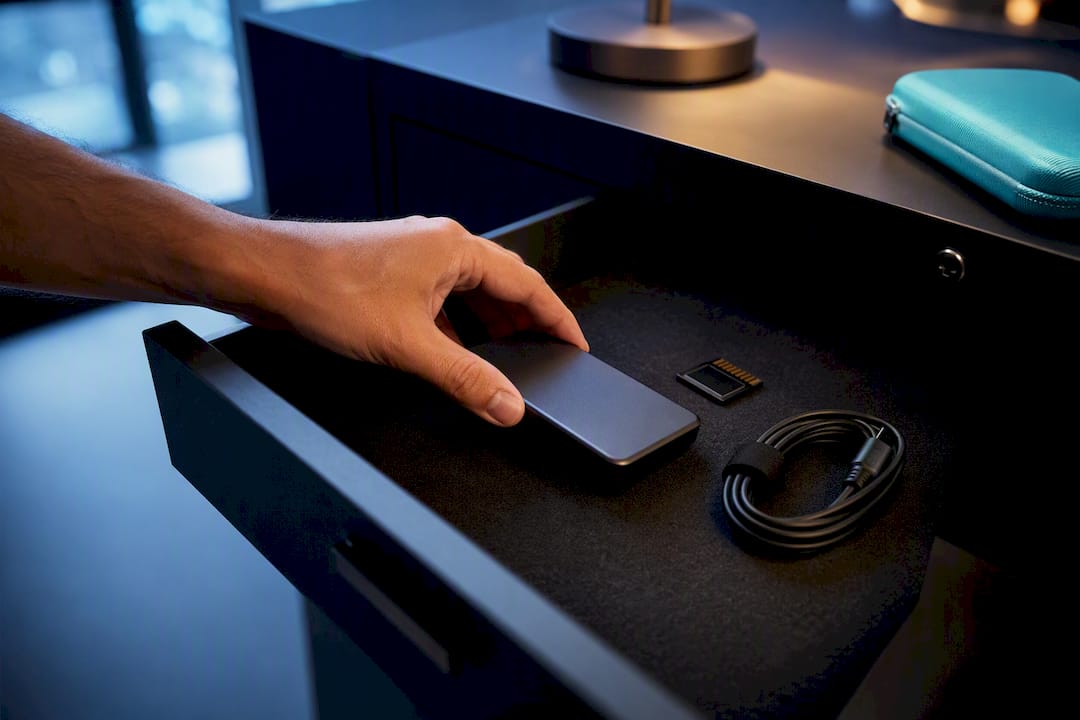
- Uploading content to platforms creates a license, not ownership, so storing original master files off-platform is essential for proof of ownership if your account is terminated.
- Contracts should specify the scope of use, duration, and territory for licensing or sales to avoid losing control of your rights, especially when dealing with broad or buyout rights.
- Work made for hire only transfers ownership to the employer or commissioning party if you are a true employee or if explicitly stated in a signed agreement under narrow legal conditions.
- Keeping detailed records and native, exportable files during production helps prevent ownership disputes and simplifies registration or takedown actions later.
Table of Contents
- Understanding Creator Content Ownership Under Copyright Law
- Does Posting on TikTok or YouTube Give Away Your Rights?
- How Contracts Change Who Owns Your Work
- When You Might Not Own What You Created
- How to Register and Enforce Your Copyright
- A Pre-Post and Contract Checklist You Can Use Today
- Why Your Production Workflow Affects Chain of Title
- Where Creators Actually Lose Their Rights
- Own the Episode, Not Just the Idea
- Where to Verify These Rules Yourself
- Sources
Understanding Creator Content Ownership Under Copyright Law
Copyright protection kicks in the instant your work is “fixed in a tangible medium,” meaning the second your camera stops recording or your draft gets saved to disk. That’s the standard set by the U.S. Copyright Office, and it applies whether you’re a solo TikTok creator or a network with a legal department. You don’t need to publish, monetize, or even finish editing for the protection to exist.
There’s a catch most creators miss: copyright protects expression, not the underlying idea. A “day in the life” format isn’t protectable. Your specific footage, script, and edit of that format is.
- Original scripts, voiceovers, and edited footage: protected
- Generic formats, trends, and challenges: not protected
- Facts, data, and short phrases: generally not protected
- Your unique arrangement and creative choices: protected
Here’s the piece that trips people up. Registering with the Copyright Office is optional for ownership, but it’s mandatory if you ever want to sue for statutory damages or recover attorneys’ fees in federal court, according to the Copyright Office’s own guidance. Without registration, you’re often limited to proving actual damages, which for a short-form video can be difficult to quantify and expensive to litigate.
Does Posting on TikTok or YouTube Give Away Your Rights?
Uploading to a platform almost always creates a license, not a sale. You keep the copyright; the platform gets permission to host, display, and sometimes redistribute your work under whatever terms you agreed to when you signed up. Most platform terms are non-exclusive, meaning you can still license the same clip elsewhere, but a few are broader than creators expect.
- Some terms are perpetual, meaning the license doesn’t expire even if you delete your account.
- Some are sublicensable, letting the platform pass usage rights to advertisers or partners.
- Account termination can cut off your access to analytics, audience data, and sometimes the files themselves.
That last point matters more than people think. The FTC has warned consumers that buying or uploading digital content usually creates a license, not ownership in the traditional sense, which leaves users exposed if a platform changes terms or shuts down. Public interest groups have gone further, urging the FTC to formally define digital ownership so that transactions without real preservation or transfer rights stop getting marketed as sales.
Pro Tip: Keep your original, unedited master files stored somewhere the platform can’t touch. If your account disappears tomorrow, that master file is your only proof the work is yours.
How Contracts Change Who Owns Your Work
A verbal handshake deal with a brand is nearly impossible to enforce. Every collaboration, sponsorship, or paid gig needs a written agreement, and the language in that agreement determines whether you keep your rights or hand them over. Legal guides for creators consistently flag missing or vague contract terms as the top cause of later disputes.
Four terms get thrown around loosely, but they mean very different things:
- License — you keep ownership; the brand gets permission to use the content for specific purposes.
- Assignment — you transfer ownership outright, usually forever.
- Buyout — a one-time payment in exchange for broad or unlimited usage rights, often functioning like an assignment.
- Work made for hire — under narrow legal conditions, the commissioning party is treated as the legal author from the start.
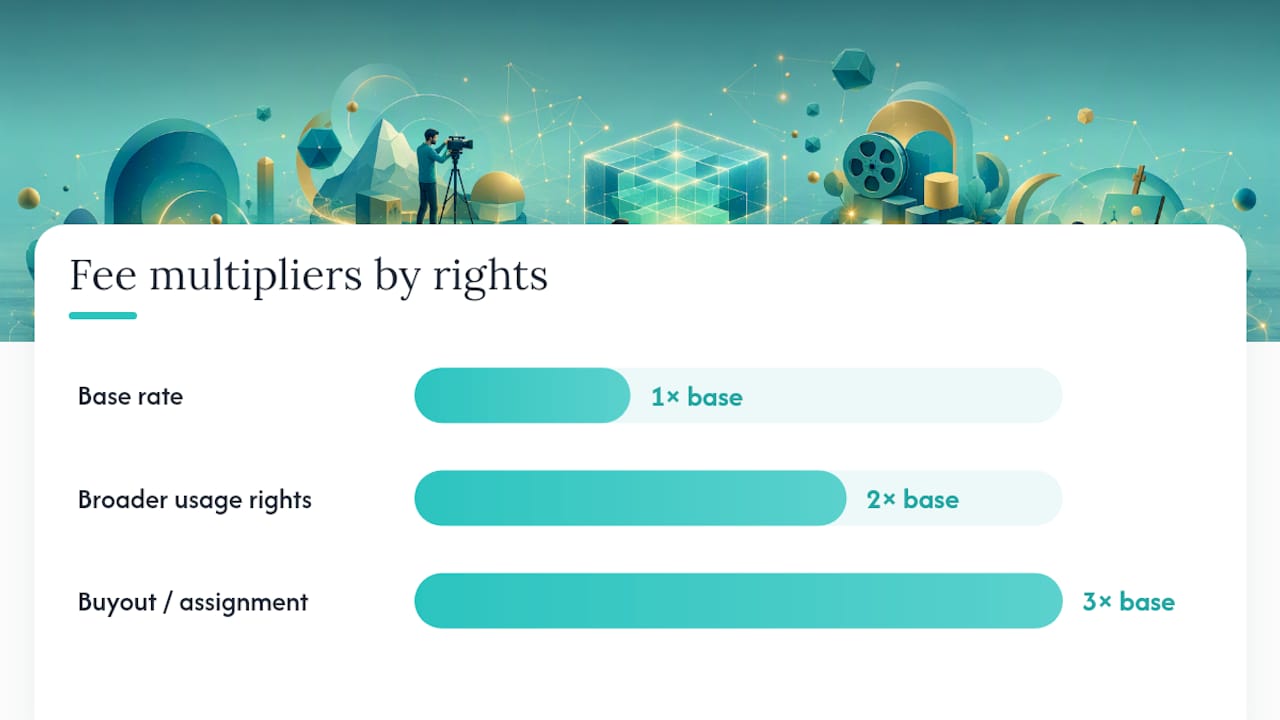
When a brand’s contract shows up, negotiate the scope before you sign anything. Push for specifics on duration (six months of usage, not “in perpetuity”), territory (domestic versus global), and whether they can run your content as paid ads, which is a different and more valuable right than organic posting. A well-drafted license names the exact platforms, exact date range, and exact use case while explicitly reserving your right to keep the content in your portfolio. If a brand wants broader rights than that, the price should go up accordingly, sometimes double or triple the base rate.
When You Might Not Own What You Created
The work-made-for-hire doctrine is the biggest exception to the default rule, and it’s narrower than most creators assume. Under Cornell Law School’s summary of the doctrine, the commissioning party owns the copyright only in specific situations, generally when you’re a genuine employee acting within your job duties, or when a written agreement explicitly labels the project as work made for hire under one of nine narrow categories.
- Employees creating content as part of their job usually don’t own the output; the employer does.
- Independent contractors typically retain ownership unless a signed agreement says otherwise.
- Assignment clauses buried in a “work for hire” agreement can transfer ownership even for contractors, so read past the label.
If you’re hiring help, editors, animators, or musicians, put a clause in the contract that explicitly assigns you the rights to their contribution. If you’re the one being hired, strike or rewrite any clause that transfers more than the specific deliverable you agreed to produce.
How to Register and Enforce Your Copyright
Registering a video or script with the Copyright Office is a straightforward online filing, and timing determines what remedies you can claim later. Register within three months of publication, or before an infringement happens, and you preserve eligibility for statutory damages and attorneys’ fees if someone steals the work, per Copyright Office guidance.
If your content shows up on someone else’s account without permission, here’s the practical sequence:
- Document everything. Screenshot the infringing post, note the URL, and save timestamps.
- Preserve your evidence. Keep your original source files, project metadata, and any messages showing when you created the work.
- File a DMCA takedown notice with the platform hosting the stolen content, citing your registration or clear evidence of authorship.
- Escalate to counsel if the platform ignores the notice or the infringement is commercially significant.
Courts have started scrutinizing platforms more closely when digital content disappears or gets misrepresented as permanently owned, a trend documented by Vanderbilt Law’s review of lost digital media cases. That shift favors creators who can prove authorship with paper trails, not just platform history.
A Pre-Post and Contract Checklist You Can Use Today
Before you publish anything, confirm you have clear rights to every third-party input, music, stock footage, guest appearances, since missing licenses are one of the most common sources of takedown disputes. A chain-of-title checklist that lists every input and confirms your right to use it commercially will save you hours later.
- Save your master files somewhere off-platform before you post.
- Add basic copyright metadata or an on-screen notice where it fits naturally.
- Read the licensing rules for any music or lyrics you use, since public performance and recording rights are governed separately.
- In brand contracts, limit granted rights to named platforms and a defined date range.
- Reserve the right to keep the piece in your portfolio regardless of the deal’s terms.
Pro Tip: If you’re publishing across TikTok, YouTube, and Instagram, check each platform’s content policy rules separately. Terms differ enough that a license that’s fine on one platform can be a problem on another.
Why Your Production Workflow Affects Chain of Title
A production process that hands you native, exportable files and a clear record of what was created and when reduces ownership disputes before they start. That documentation, sometimes called chain of title, is exactly what you need if you ever have to prove authorship for a registration or a takedown notice.
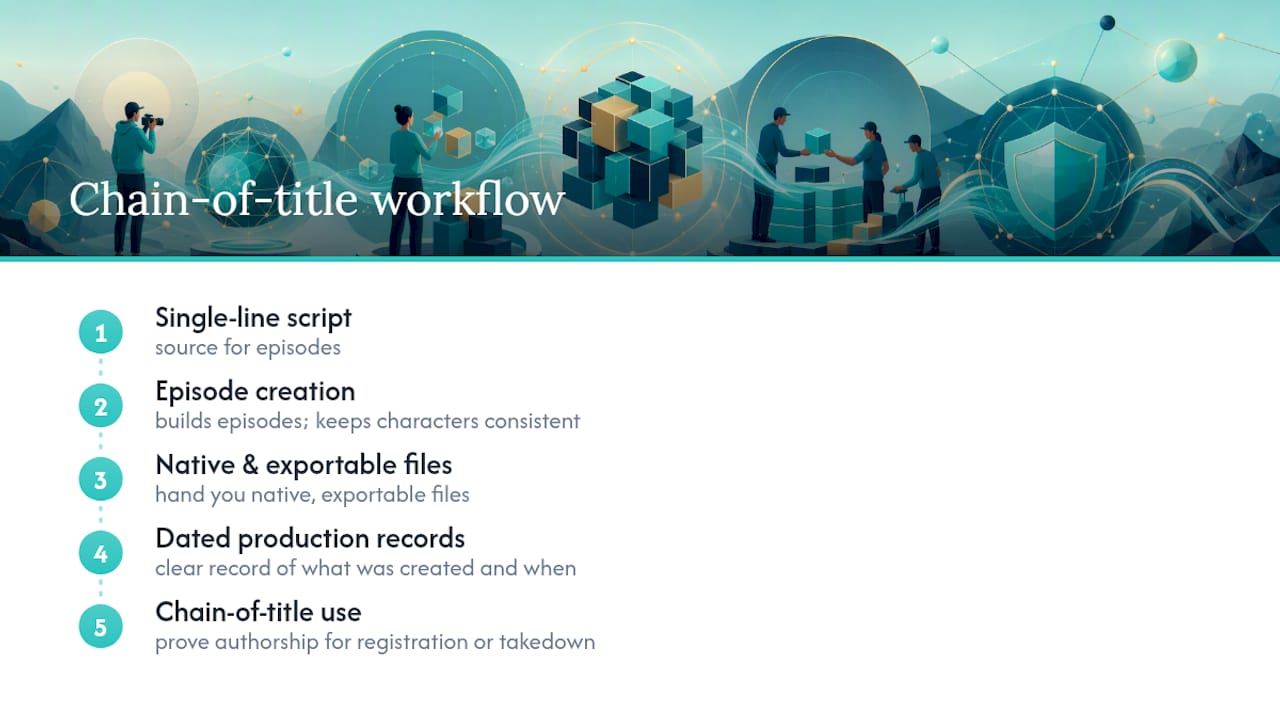
Iguanify builds episodes from a single line of script while keeping characters consistent across a series, and creators retain ownership of everything produced. For solo creators scaling a serialized short-form series, that combination of speed and recordkeeping matters more than doing everything by hand ever will.
Where Creators Actually Lose Their Rights
Most rights problems I see don’t come from big studio contracts. They come from small deals with vague “buyout” language that nobody negotiated. Register your best work, keep masters offline, and if a deal demands broad ownership, ask for more money or walk.
— Leonard
Own the Episode, Not Just the Idea
A platform alternative to hiring an editor or production team allows creators to produce serialized episodes while retaining ownership. With a single line of script, such a platform can build a full episode with consistent characters across a series, and users retain rights to the produced content, without complex assignment or buyout clauses.
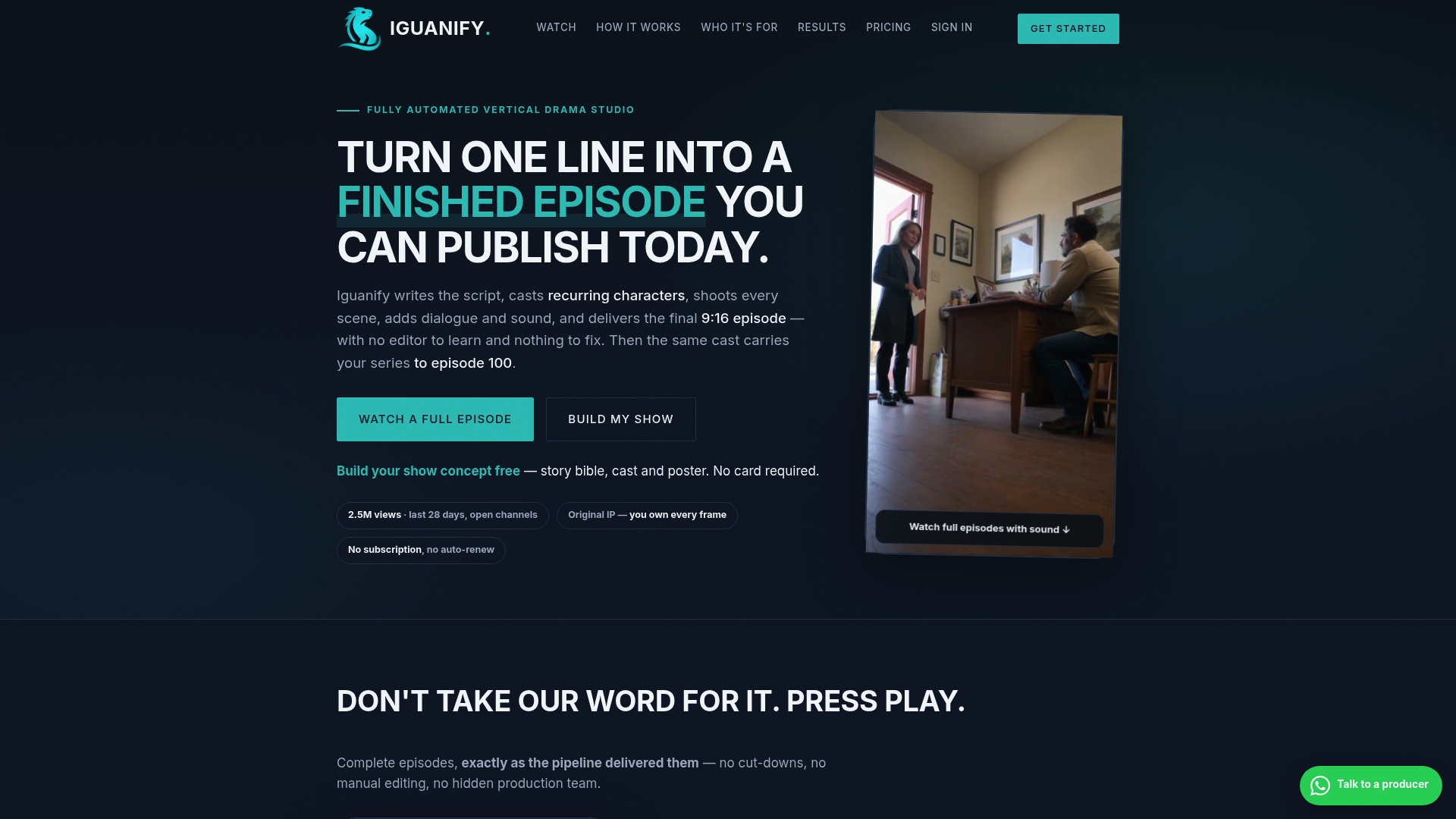
That matters because most production shortcuts, stock footage bundles, freelance editors, template-driven apps, come with licensing strings attached or unclear ownership of the final cut. This approach avoids ownership complications by delivering native files that users can register, archive, and post across platforms without needing additional permissions. If you’re building a serialized drama or faceless channel and want production speed without sacrificing chain of title, visit the Iguanify landing page and see what a single script line can become.
Where to Verify These Rules Yourself
Check the U.S. Copyright Office for registration basics, FTC consumer alerts on digital ownership, and practical creator contract guides for negotiation checklists.
Sources
- U.S. Copyright Office — What is Copyright?
- FTC — Do you really own the digital items you paid for?
- Cornell LII — Work made for hire