 IGUANIFY
Character Bio Template: Start at the End, Track Series Continuity

A character bio template is a structured reference sheet that captures everything you need to write a consistent character: identity and role, appearance, personality and voice, Want versus Need, backstory, relationships, and continuity anchors. Templates come in different sizes, from a quick mini-sheet to a full development workbook, and this guide gives you copy-paste versions of each.
TL;DR:
- A one scene character generally needs only a mini profile of about six fields; reserve a full workbook for protagonists and other central characters.
- Build the profile from the ending backward: define the endpoint and conflict, then the starting state and Want versus Need, before adding appearance or habits.
- Use two or three memorable appearance details, three to five personality traits, a speech habit, and a stress response to keep the profile focused.
- For a series, separate fixed facts from a change log, add a voice anchor and knowledge ledger, and update the record when scenes change canon.
Table of Contents
- Core template components: fields to copy and fill
- Template sizes and when to use each
- How to fill a character bio: start at the end
- Serial continuity: what a series bible should track
- A practitioner’s note on keeping characters consistent
- Another option: turning your bible into produced episodes
- FAQ
- Sources
Core template components: fields to copy and fill
A good template groups related details so you fill them in logical chunks instead of hunting through a blank page. Start with identity and role: full name, aliases, pronouns, and the character’s function in the story (protagonist, foil, mentor). Keep appearance notes short. Two or three memorable markers, like a scar, an unusual gait, or a specific height, do more work than a paragraph of physical description.
Personality and voice come next, much like how users customize their companion’s traits in an AI girlfriend character creator. Pick three to five adjectives that describe the character, then note a speech tic or verbal habit and a default emotional response to stress. This is where voice starts to feel specific instead of generic.

The engine of the whole sheet is Want versus Need: the external goal the character chases, the internal need they actually require, and the wound or false belief standing between them. According to a practical fill order outlined by 48HrBooks, mapping this tension before anything else produces an arc-oriented profile instead of a static list of facts.
Round out the sheet with:
- Backstory highlights: only the events and secrets that actively shape current behavior.
- Relationships: key people in the character’s life and the tension or support each one provides.
- Continuity anchors: fixed facts (eye color, hometown, birth order) plus a simple log of what changes by chapter or episode.
According to Reedsy Studio’s character profile template, a workable sheet includes identity, story role, appearance, personality and voice, backstory, goals and motivations, relationships, and a record of chapter or scene appearances, scaled to how much the character matters.
Template sizes and when to use each
Not every character needs the same depth of paperwork. A minor character who appears in one scene doesn’t need the same treatment as your protagonist, and filling out 24 fields for a background waiter wastes time you could spend writing.
Arc Studio’s guidance on writing character bios makes the point directly: protagonists need more development than one-scene supporting characters, and profiles should expand as the manuscript’s needs grow. LitMemo’s character sheet template offers three ready sizes built around that logic.
Add genre-specific fields only when the story needs them: magic systems or abilities for fantasy, species or world-origin notes for sci-fi, or signature possessions for a character whose gear matters to the plot. Mark anything speculative as “optional” or “private” rather than deleting it, since a field you never update is worse than no field at all. It sits there looking authoritative while quietly going stale.

How to fill a character bio: start at the end
Most writers fill a template top to bottom, name first, backstory last. That order produces characters who look complete on paper and feel flat on the page. A reverse, arc-first order works better because it forces every surface detail to serve a purpose you’ve already defined.
- State the endpoint. Decide who this character becomes by the story’s end and what core conflict gets them there.
- Define the starting state. Note where they begin and the pressure points the plot will apply to move them.
- Map Want versus Need. Write the external goal, the internal need, and the wound or belief blocking the shift from one to the other.
- Fill in the rest. Appearance, habits, routines, and trivia all get easier once the arc is locked, because now you’re choosing details that support decisions you’ve already made.
Pro Tip: Update the character record in the same writing session as any scene that changes canon, not weeks later when you’ve forgotten the detail.
That maintenance habit matters more than people expect. Booksshelf’s guide to series bibles recommends updating the record the moment a scene changes canon, so drift never has a chance to build up. When you’re ready to move details from an individual profile into a shared series bible, separate fixed facts (hair color, backstory events that won’t change) from a running change log (injuries, revealed secrets, shifting relationships) so the two don’t get tangled together.
Serial continuity: what a series bible should track
Once you’re writing episodes instead of a single manuscript, a character template stops being enough on its own. You need a series bible that holds the facts that never change alongside a log of what shifts from one installment to the next.
Booksshelf’s series bible framework recommends recording fixed facts first, then logging changes by chapter or episode, with a voice anchor and a knowledge ledger layered on top. In practice that means:
- A voice anchor: three to five lines of characteristic dialogue you can reread before writing new scenes for that character.
- A knowledge ledger: a simple record of who knows what, and when they found out, so secrets don’t leak early by accident.
- Lightweight update triggers: the record gets touched in the same session as the scene that changes it, never batched for later.
This matters because character depth isn’t just a craft preference. Recent research on measuring character depth suggests that greater perceived depth, meaning multifaceted psychology and believable motives rather than simply more fields, produced more positive audience dispositions toward a narrative. Modular templates make this manageable at scale: each character keeps an individual sheet, and the series bible aggregates only what changes across episodes, so production on episode 12 doesn’t require rereading episode 1 from scratch.
A practitioner’s note on keeping characters consistent
We’ve watched writers lose a day rewriting a scene because a character’s established fear contradicted something set up three episodes earlier. A profile paired with a running change log would have caught it in thirty seconds. The habit that actually sticks isn’t the fanciest template, it’s updating the record the moment canon shifts, not after the fact.
Treat every template here as a starting point to adapt, not a form to obey.
— Leonard
Another option: turning your bible into produced episodes
Writing the bible is the part only you can do. Once you have complete character profiles and a working series bible, the slower part of episodic production, casting, shooting, editing, keeping faces consistent across episodes, is work we built Iguanify to remove.
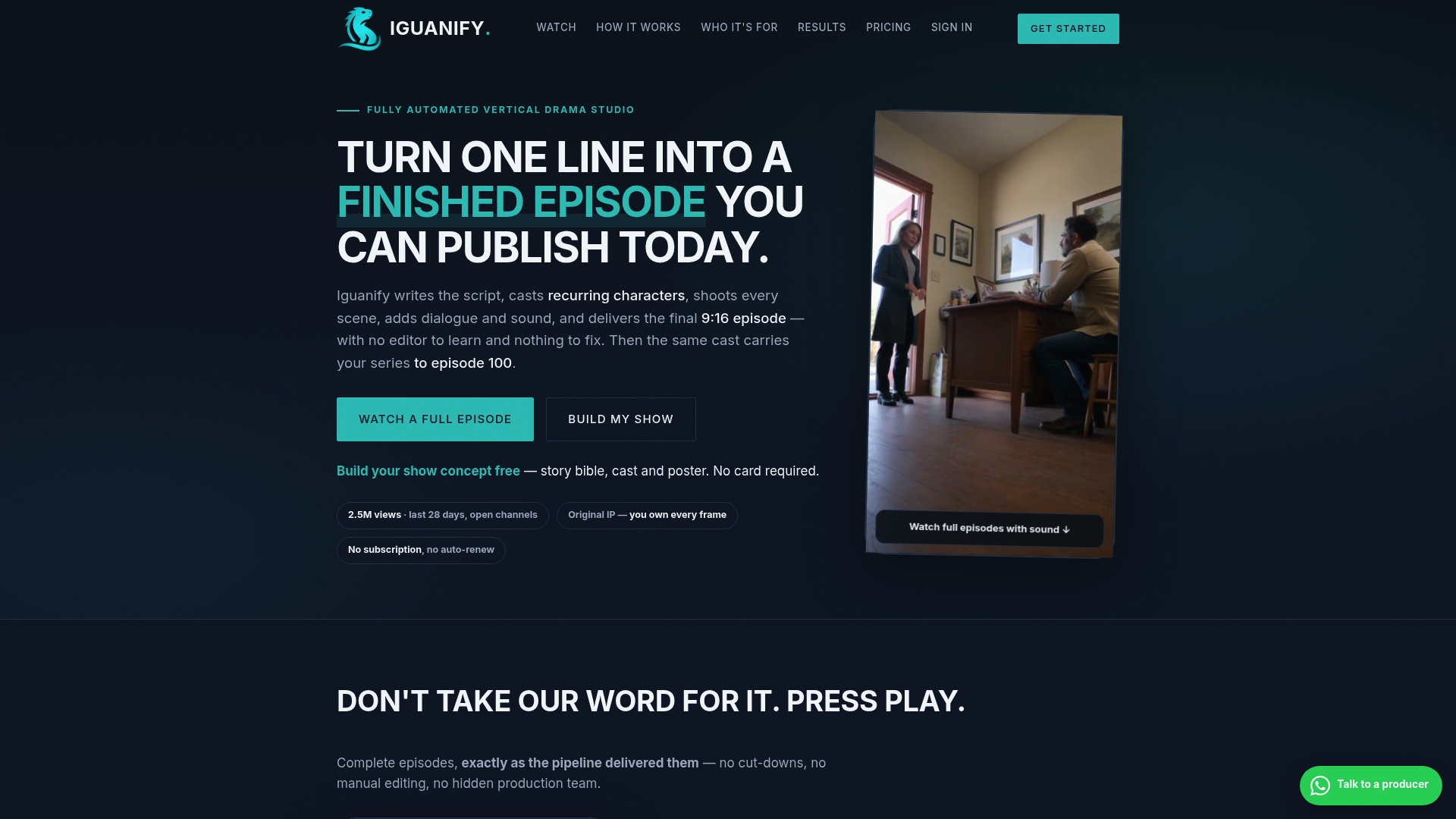
Feed us a premise and your character details, and we generate the recurring cast, scripts, and fully produced vertical episodes from a single line of script. That consistency problem is exactly what a well-maintained series bible exists to solve, which is why creators who’ve already done the character work tend to move through our process fastest.
- You keep full ownership and commercial rights to every episode we produce.
- Episodes arrive ready to publish on TikTok, YouTube, and Instagram with no manual editing.
- Pricing starts with a Standard episode at $34.99 one-off, with Creator, Season, Studio, and Slate options for larger runs.
This is an alternative route for creators who want their series bible to become video, not a requirement for writing one. If scripting and producing episodes yourself is the plan, everything above still applies on its own. If you’d rather see your cast on screen, check available production packs.
FAQ
What fields belong in a basic character bio template?
At minimum, include identity and aliases, story role, appearance, personality and voice, backstory, goals and motivations, relationships, and a record of chapter or episode appearances, according to Reedsy Studio’s template. Expand beyond these only as the character’s importance grows.
How detailed should a character profile be for a minor character?
A minor or one-scene character generally needs only a mini template, around six fields, while protagonists benefit from a full development workbook, per Arc Studio’s guidance. Matching depth to story importance keeps your workflow from stalling on paperwork.
What is the best order to fill out a character bio?
A reverse, arc-first order works well: state the endpoint and core conflict first, then the starting state, then Want versus Need, and fill in appearance and habits last, following the fill order described by 48HrBooks. This keeps surface details tied to the character’s actual arc instead of floating free of it.
How do I keep character details consistent across episodes?
Separate fixed facts from a running change log and update both in the same session as any scene that changes canon, an approach detailed in Booksshelf’s series bible guide. Adding a voice anchor and a knowledge ledger prevents the small inconsistencies that build up across a long series.
Can AI tools help manage character relationships across a cast?
Yes. Research on LLM-assisted character creation describes systems that generate related mini-profiles, journal entries, and relationship attributes to help writers expand an ensemble while keeping relationship dynamics consistent across installments.
Sources
- Character profile template | Reedsy Studio
- How to write a character bio | Arc Studio
- Character Sheet Template — 24 Fields, Examples, Copy-Paste Version | LitMemo
- The series bible every author needs | Booksshelf
- Constella: Supporting storywriters’ interconnected character creation through LLM-based multi-agents | ACM