 IGUANIFY
Publish Social First: Fast Short Drama Distribution for U.S. Creators

Publish first to social short-video for discovery, then convert the audience into paid distribution or platform deals. The format known as duanju proved that vertical, cliffhanger-driven episodes could build massive audiences on a phone screen, and that same playbook now drives platform commissioning in the United States. Some automated tools can compress production time enough to make that discovery-first approach realistic for a solo creator.
TL;DR:
- Social platforms like TikTok, Shorts, and Reels are crucial for discovery, with TikTok valuing quick hooks and trend participation, while Shorts relies on searchability.
- Dedicated short-drama apps generate revenue through in-app purchases, subscriptions, and ad deals, making them ideal for monetization once audience traction is established.
- Automated production tools significantly shorten the content creation cycle, enabling faster testing of premises and increasing the chances of securing distribution deals.
- Post early versions of episodes on social platforms to gather retention data, which is more valuable for pitching than perfecting a pilot for months.
- Effective cross-platform reformatting—including watermark removal, tailored captions, and staggered posting—preserves reach and optimizes audience engagement.
Table of Contents
- Which platforms actually matter for short drama distribution
- Platform-by-platform tactics that actually move the needle
- How to actually pursue each distribution route
- Practical guide to monetizing a short drama series
- Prep checklist, timeline, and what a season actually costs
- How automated production shortens the path to distribution
- Legal considerations beyond rights and IP
- Audience segmentation and targeting by platform
- Why collaborations and partnerships expand your reach
- Trends and technology reshaping short drama distribution
- Timing your distribution strategy
- Get your episodes production-ready with Iguanify
- Sources
- FAQ
Which platforms actually matter for short drama distribution
Short drama distribution runs through three distinct surfaces, and each one does a different job. Understanding which surface handles discovery and which handles revenue keeps you from wasting months pitching the wrong audience.
Social short-video platforms, meaning TikTok, Instagram Reels, and YouTube Shorts, are your discovery engine. They’re free to post on, they reward hooks and cadence over production value, and they’re where most vertical drama audiences first encounter a series. Industry comparisons show these platforms also feed dedicated apps and paywalls: a viewer sees three episodes on TikTok, gets hooked, then downloads an app to finish the season.
Dedicated short-drama apps, such as the ones compared in recent platform analysis, are where the money lives. These apps run on in-app purchases, subscriptions, and increasingly on programmatic ad deals, and they commission or license content directly from producers who can show them a pilot and a series bible.
FAST channels, AVOD services, and OTT placements are the slower, more traditional third lane. They matter less for discovery but can add a stable, background revenue stream once a series has proven itself elsewhere.
A few rules of thumb help you decide where to put your energy first:
- Favor discovery-first when you have no existing audience and want proof of concept before pitching anyone.
- Favor direct pitching when you already have a strong concept, a series bible, and some completed footage that shows tone and pacing.
- Never skip the social phase entirely, even if you plan to license, because retention data from an open platform is your best negotiating leverage.
- Treat FAST and AVOD as a later addition, not a launch strategy, since they reward existing catalog more than new IP.
The practical sequence for most creators: build an audience on short-video, then use that traction to open conversations with app commissioning teams or aggregators.
Platform-by-platform tactics that actually move the needle
Each platform rewards a slightly different production style, and treating them identically is the fastest way to underperform on all three.
TikTok runs on hook speed. The first two seconds need to stop the scroll, and loopable edits, meaning episodes that end on a beat that flows naturally back into the start, tend to outperform ones that just cut off. Vertical drama episodes on TikTok typically run in the same 45 second to two minute range that defined the original duanju format, and creators who post on a consistent daily or near-daily cadence build audience faster than those who post in bursts. Trend participation, meaning tying an episode’s premise or audio to whatever is already circulating, gives new series an early boost that pure originality doesn’t.
YouTube Shorts rewards searchability more than trend-chasing. A title like “She Found Out the Truth at the Wedding, Episode 4” does more work than a clever one-liner, because Shorts search behavior leans closer to YouTube’s long-form search than TikTok’s for-you feed. Shorts also feed the parent channel: viewers who like a Short often click through to a channel page, which is where long-form recaps, behind-the-scenes content, or full-episode compilations can convert casual viewers into subscribers. Comparative platform data points to Shorts as the strongest option for long-tail monetization among the three major short-video platforms.
Instagram Reels leans commercial. Its audience tends to skew toward viewers who respond well to polished visuals and brand-adjacent content, which makes Reels the platform where sponsorship and partnership conversations happen most naturally. A series with a clear aesthetic, strong wardrobe, or lifestyle hook often performs better here than a plot-heavy drama that needs several episodes to land.
Dedicated short-drama apps want something more formal before they’ll talk. Most commissioning teams ask for a pilot episode, a sizzle reel that shows tone across several planned episodes, and a series bible outlining character arcs and season structure. Deal shapes vary: some apps offer a buyout, meaning a lump sum in exchange for full IP ownership, while others offer a license or revenue share that keeps some upside with the producer. Platform analysis notes that apps also differ by genre fit: some favor premium English-language originals, others run high-volume translated catalogs alongside programmatic ad inventory.
When cross-posting the same episode across platforms, a few technical habits protect your reach:
- Strip watermarks before reposting, since most platforms suppress reach on content carrying another platform’s branding.
- Rewrite captions for each platform rather than copy-pasting, since search behavior and slang differ by audience.
- Preserve vertical aspect ratio and each platform’s preferred delivery specs rather than uploading one generic export everywhere.
- Stagger posting times slightly across platforms so you can track which one is driving a given spike in views.
Pro Tip: Post your pilot episode on TikTok first, since its discovery algorithm gives new accounts the fastest read on whether a premise works before you invest in a full season.
How to actually pursue each distribution route
Once you know which surfaces matter, the next question is operational: what do you prepare, and who do you talk to, for each route.
Self-release is the lowest-friction path and the right starting point for almost everyone. The steps are straightforward but easy to skip under time pressure:
- Match each platform’s technical specs, including resolution, aspect ratio, and maximum length, before you export a final cut.
- Design a strong thumbnail or first frame, since that single image often decides whether a scroll stops.
- Build a cross-post schedule so episodes land on TikTok, Shorts, and Reels within a tight window rather than spread over days.
- Track analytics from day one, watching completion rate and rewatch rate specifically, since those two numbers matter more to future pitches than raw view count.
Pitching to apps requires more preparation but opens the door to real revenue. A commissioning deck typically includes a one-page premise, character breakdowns, a completed pilot or sizzle reel, and a rough season outline. Budget expectations vary widely by app and genre, and the central negotiation point is almost always buyout versus revenue share: a buyout pays a fixed fee upfront and hands over IP ownership, while a license or revenue-share deal pays less initially but keeps the producer attached to future earnings. Proven audience traction from your self-release phase is the single strongest card you can bring to this conversation.
Aggregators and multi-platform distribution services sit between self-release and direct pitching. They typically take a percentage fee in exchange for handling multi-platform uploads, metadata, and sometimes ad-sales relationships you couldn’t access alone. They make the most sense once you have a catalog of several episodes or seasons and want to offload the operational overhead rather than negotiate platform by platform.
Festivals and sales marketplaces move on a much slower timeline, often months between submission and any response, and they suit a rights-first strategy better than a volume strategy. They’re worth pursuing if you’re aiming for a specific licensing deal or want festival recognition to strengthen a later pitch, but they’re rarely the fastest way to an audience or a paycheck.
Practical guide to monetizing a short drama series
Revenue for short dramas comes from four main channels, and most successful producers eventually combine more than one.
In-app purchases and subscriptions are the backbone of dedicated short-drama apps. Viewers pay to unlock episodes or subscribe for ad-free access, and producers who license rather than sell outright typically see a share of that recurring revenue rather than a single payment.
Ad revenue splits into two flavors. Direct ad deals are negotiated case by case, while programmatic ad partnerships, including recent integrations with demand-side platforms, let apps sell inventory automatically at scale. Programmatic deals tend to open more consistent, if smaller, per-view payouts compared to hand-negotiated sponsorships.
Social platform monetization includes creator funds, tipping features, and sponsored content deals, none of which typically match what a licensed series earns inside a dedicated app, but all of which help fund production while you build toward a pitch. The real value of social monetization is the funnel it creates: reporting on the microdrama boom describes TikTok, Reels, and Shorts clips functioning as trailer-like discovery tools that push viewers into paid apps and subscriptions.
Brand deals work best on Reels-heavy series with a strong aesthetic, and they’re the one revenue stream that doesn’t depend on any platform’s algorithm or commissioning team.
A quick rule for weighing these options against each other:
- Choose a buyout when you need cash now and don’t expect the series to have long-term franchise value.
- Choose a license or revenue share when you believe the series can sustain multiple seasons or spin-offs.
- Stack social monetization on top of either, since it rarely conflicts with app-based deals and keeps cash flowing during production gaps.
- Reserve brand deals for series with a consistent visual identity, since sponsors care about aesthetic fit as much as view count.
**U.S. audiences for microdramas have grown rapidly enough that major media companies are now experimenting directly with the format, according to market reporting on the microdrama boom, a signal that the commissioning market for producers is expanding rather than saturating.
Prep checklist, timeline, and what a season actually costs
Getting from idea to a pitch-ready series follows a fairly predictable sequence, even if the polish level varies by budget.
- Write the script and series bible first, since commissioning teams and even algorithm-driven platforms respond better to a clear character arc than a loose premise.
- Clear cast and location rights before shooting, especially if you’re working with actors under any kind of collective agreement, since unclear rights can stall a licensing deal later.
- Confirm technical delivery specs, including vertical aspect ratio and platform-specific length limits, before your first shoot day, not after editing.
- Produce your pilot or first several episodes, budgeting more time for continuity, meaning consistent characters, wardrobe, and setting, than for any single scene’s polish.
- Post the pilot on social short-video and track completion and rewatch rates for at least a couple of weeks before deciding whether to keep self-releasing or start pitching.
- Assemble your pitch-ready deliverables, meaning the pilot, a sizzle reel, the series bible, and your early performance data, once you have traction worth showing.
A full self-released microseries running 20 to 60 episodes typically takes longer to produce than a single commissioned pilot, since a commissioned schedule usually locks a delivery date upfront while a self-released series can be paced around your own output speed. Budget bands vary widely, but the money in traditional short drama production tends to concentrate in talent, post-production, and localization if you’re translating for multiple markets. Lean production tips that keep costs down include shooting multiple episodes in a single location day and reusing wardrobe across episodes rather than treating each one as a standalone shoot.
How automated production shortens the path to distribution
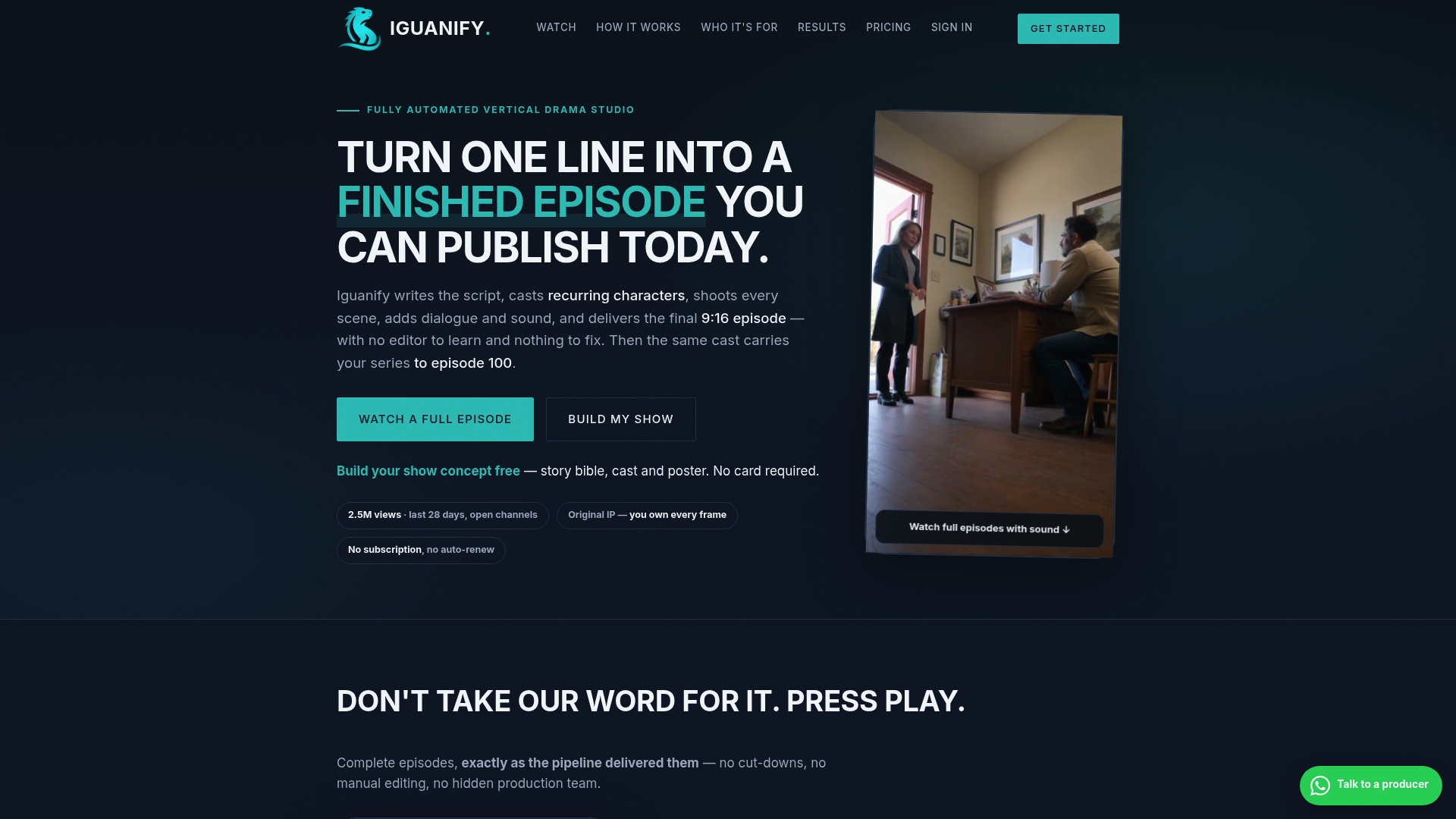
Automated episodic production changes the math on all of the above by cutting the gap between idea and pitch-ready content. Certain automated production solutions produce fully realized episodes from a single line of script, maintaining consistent characters across episodes, which can solve the continuity problem that slows down manual short drama production and often shows up as a red flag in commissioning reviews.
That speed matters most in two places: getting a pilot in front of a platform faster, and hitting the daily or near-daily posting cadence that TikTok and Shorts both reward.
- Continuity is handled automatically, since recurring cast and setting stay consistent without manual tracking across episodes.
- Delivery is instant, which shortens the time between writing a premise and having a postable episode.
- Creators retain full rights to episodes produced through the platform, which keeps every licensing and revenue-share option on the table rather than locking you into a single distribution path.
A practical next step is producing a single pilot episode to test platform fit before committing to a full season.
Legal considerations beyond rights and IP
Rights ownership isn’t the only legal question a short drama producer needs to answer. Content compliance varies by platform: TikTok, Instagram, and YouTube each enforce their own community guidelines around violence, sexual content, and misleading claims, and a series that skirts those lines risks demonetization or removal regardless of how well it performs.
Regional regulations add another layer once a series crosses borders. Advertising standards, data privacy rules, and content classification differ by country, and a series monetized through programmatic ads may be served to audiences under rules the producer never directly agreed to. Talent releases and location permits carry their own compliance requirements too, particularly for series involving minors or public settings.
The safest approach is treating platform terms of service as a living document, reviewing them before each new season rather than assuming rules haven’t changed since your last upload.
Audience segmentation and targeting by platform
Different platforms surface different audience segments, and treating them as one undifferentiated group wastes targeting effort. TikTok’s for-you feed segments largely by engagement behavior rather than declared demographics, so a series’s algorithmic audience often looks different from who the creator imagined while writing it.
YouTube Shorts audiences tend to overlap more with a channel’s existing subscriber base, which makes Shorts a better tool for retargeting an audience you already have than for finding a brand-new one. Instagram Reels leans toward audiences that respond to lifestyle and aesthetic cues, making it a stronger fit for series with a clear visual identity or commercial angle.
Segmenting by viewing behavior, meaning completion rate, rewatch rate, and drop-off point within an episode, gives a more actionable picture than platform demographics alone. A series that loses viewers at the exact same beat across episodes has a pacing problem worth fixing before the next platform push.

Why collaborations and partnerships expand your reach
Distribution rarely scales through a single creator’s own following, and partnerships often do more for reach than another round of paid promotion. Cross-promotion with other short drama creators, meaning trading shoutouts or guest cameos between series, exposes each audience to content it wouldn’t otherwise find.
Partnerships with platforms themselves matter too. Programmatic ad partnerships between short-drama apps and demand-side platforms expand the pool of advertisers willing to buy inventory against a series, which indirectly raises payouts for producers already on those apps. Aggregator relationships work similarly, opening distribution channels a solo creator couldn’t negotiate individually.
Understanding your own audience data makes every one of these conversations easier. As analysis of audience data for artists points out, creators who can show clear retention and engagement numbers negotiate from a stronger position than those pitching on concept alone, a lesson that applies just as directly to short drama producers courting platform partners.
Trends and technology reshaping short drama distribution
The most consequential trend right now is the same one driving everything else in this article: production automation is compressing the time between concept and postable episode, which changes how quickly a creator can test a premise and pivot if it doesn’t land. That speed advantage increasingly separates producers who can iterate weekly from those still working on a traditional production schedule.
Programmatic advertising is also reshaping monetization on the app side, giving dedicated short-drama platforms more consistent ad demand without needing to negotiate every sponsorship manually. That shift tends to favor producers with a steady output over those relying on a single viral hit.
On the audience side, the format’s roots in duanju continue to influence pacing expectations even as English-language series diverge from the original Chinese format. Cliffhanger density and episode length norms borrowed from duanju remain the baseline that most vertical drama, regardless of language or platform, gets measured against.
Timing your distribution strategy
The mistake I see most often is creators polishing a pilot for months before posting anything. Platforms reward proof of concept, not perfection, and a rough episode that gets real completion data teaches you more than a flawless one nobody has watched. Post early, watch the retention numbers, and only chase a licensing conversation once you have evidence, not just a hunch, that the premise works.
— Leonard
Get your episodes production-ready with Iguanify
Every distribution route above starts with the same bottleneck: having enough finished episodes to test. Some platforms remove that bottleneck by producing full episodes from a single line of script, keeping cast and continuity consistent across a season without a manual editing pass, and providing full ownership of produced content, so every licensing or revenue-share option discussed in this article stays open to the creator.
| Offering | Best for |
|---|---|
| Standard episode | Testing a single premise on social platforms |
| Pilot | Building a commissioning deck for app pitches |
| Creator | Ongoing solo channel production |
| Season | Committing to a full multi-episode arc |
| Studio | Higher-volume output across projects |
| Slate | Managing multiple series at once |
| Commissioned production | Custom projects built to a specific brief |
Start with a Standard episode to see how quickly a script becomes a postable pilot, or explore the self-serve production engine if you want to run the whole workflow yourself.
Sources
- Duanju
- Short Drama Apps Compared: ReelShort vs DramaBox in 2026 - Filmustage Blog
- YouTube Shorts vs TikTok vs Reels: Which Wins in 2026? | Vidpal
- Microdramas boom in a shrinking Hollywood as studios chase a TikTok audience | MWC Sandbox/Syndication
FAQ
What is a good distribution company for short films?
There’s no single dominant company that fits every short film, since options range from self-release on social short-video to aggregators that handle multi-platform uploads for a fee. The right fit depends on whether you need reach, revenue, or both, and most creators start with self-release before working with any third party.
Do short dramas make money?
Yes, through a mix of in-app purchases, subscriptions, ad revenue, and brand deals, though earnings depend heavily on the deal type and platform. Industry reporting points to rapid audience growth in the format, which is expanding revenue opportunities for producers who build traction.
What is a good short drama hub?
Dedicated short-drama apps function as hubs where audiences pay to watch full series, and different apps favor different content styles, from premium English-language originals to high-volume translated catalogs. Platform comparisons are the best way to see how commissioning and monetization differ between them before pitching.
Which short drama pays real money?
Payment depends more on the deal structure than the platform itself: a buyout pays a lump sum upfront in exchange for IP ownership, while a license or revenue-share deal pays less initially but keeps the producer earning over time. Proving audience retention on social short-video before pitching typically strengthens the terms a producer can negotiate.
How can automated production help creators reach distribution faster?
Tools like Iguanify produce full episodes with consistent characters directly from a script, cutting the time between concept and a postable pilot. That speed makes it easier to test a premise on social platforms and gather the retention data that platform commissioning teams want to see before signing a deal.